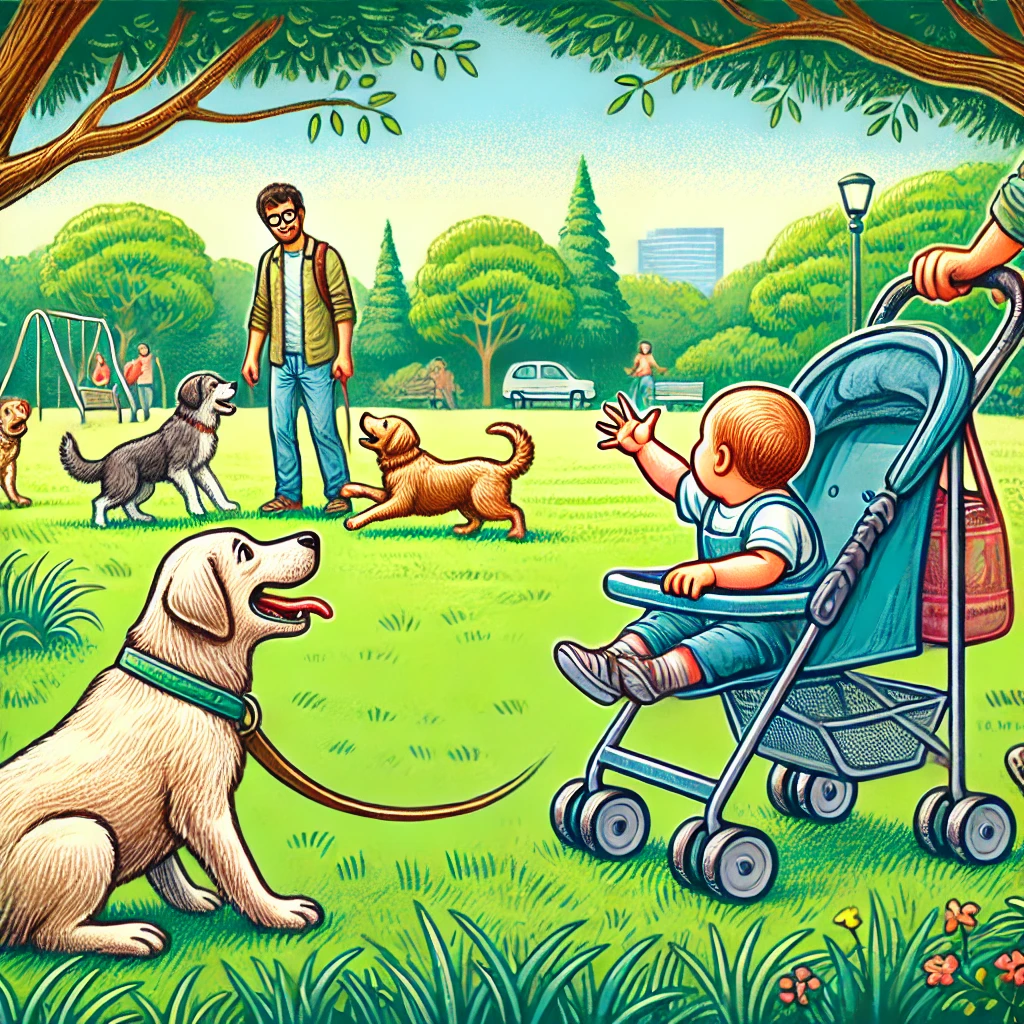
So I was sitting in my car by the park the other day. A person was walking by with her dog. The animal, all of a sudden, gave a jerk and momentarily paused, its head raised and eyes fixed on some activity at the other corner of the lawn. I followed its gaze and saw some humans and their dogs; the latter were catching frisbees and having fun. The dog turned its head toward its owner, whimpered a bit, as if asking: “Can I go play with them doggies over there? Can I please?” That got me thinking: How does the dog know it’s a doggie? You never see dogs whimpering and asking to join a feline party or, for that matter, a crow party or a squirrel one.
Here’s another familiar scene — at least in the good old days: a baby nursing at its mother’s breast. A neighbor with her toddler stops by, and the baby pops the you-know-what out of its mouth, starts waving its short little arms, and twists its body, wanting to be put down so it can go play with the other toddler. That’s peculiar because these little humans don’t do this when they see a big child, an adult, or an infant smaller than themselves. What’s going on? How does a toddler know it is a toddler, and that some creature resembling it in size has just stopped by?
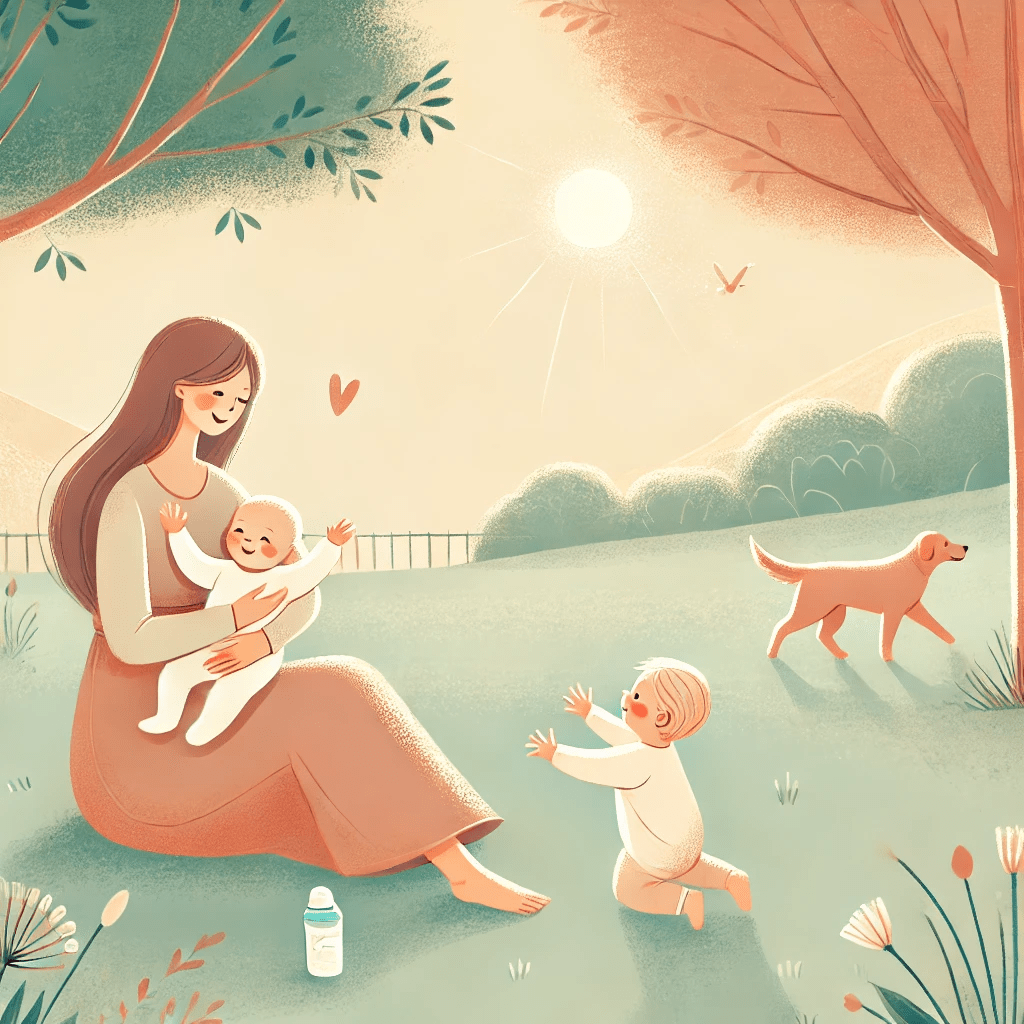
One answer I can think of is what might be called “the crude Darwinian answer.” It goes something like this: It’s just simple adaptation! Survival of the fittest. A dog that finds a non-dog attractive either gets eaten, mauled to death, or leaves no offspring. If that happens, its line ends with it, and its stock dies out. This explains why you only see dogs that run after other dogs — because those that ran after non-dogs never returned. There’s no deeper reason than this simple fact.
The same thing applies to toddlers. You always see toddlers hanging out with other toddlers — crawling on the ground, putting dirt into their mouths, and such. You rarely, if ever, see toddlers hanging out with crows, squirrels, or even humans much bigger than themselves, like their dads or other people’s big kids. The toddlers that played — or tried to play — with bigger kids might have fallen into a pond and gone unnoticed, or picked up a snake in the bush, gotten bitten, and died because no one noticed — not the big kids, who were too busy playing their own games, and not their dad, who was on his third or fourth beer. Or they got snatched by people who steal babies to sell to other humans. So the reason toddlers are always attracted to other toddlers is simple: those that tried to hang out with non-toddlers didn’t survive long enough to reproduce. And that’s why you don’t see them.

But there is another possibility. Toddlers have a self-conception. They know they’re toddlers, and they know that those who look like them are toddlers too. You put a toddler in front of the mirror. What does it do? It tries to touch (or scratch) its reflection. Yet it wouldn’t do this if it’s another face – unless the face is that of another toddler, or that of mommy. The same reason they try to touch themselves in the mirror is the same reason they’re attracted to other toddlers. “Mommy, put me down; I wanna go play with those toddlers.” This answer may seem overly conceptualized. But there are levels of sophistication when it comes to a sense of self. At a fundamental level, a sense — not a concept — of what’s “me” and what’s “non-me” is common to all living things, from adult humans all the way down to amoebas. If even a single cell has a sense of “me” vs. “non-me,” who’s to say we can’t attribute it to toddlers?
A sense of self vs. non-self is vital for survival for all living things. If a virus finds its way into a cell, the cell’s self-defense mechanism is compromised, leading to its eventual demise. If your immune system can’t tell whether something entering your body is domestic or foreign, your self-defense mechanism is compromised, and we know where that leads — to the hospital or, in the worst-case scenario, the morgue.
This line of thinking raises a question: Could the attraction to “like” creatures also be an evolutionary advantage tied to self-preservation? While the Darwinian explanation emphasizes survival mechanisms, it may not fully account for the deeper, instinctual recognition of similarity — a recognition that underpins social connections even in early life. Toddlers and dogs alike might possess a primitive awareness of “belonging” that goes beyond survival and taps into the foundations of community.
On social media, you see all sorts of attempts by one creature to mess around with the self-conception of others. From making kittens play with puppies, chimps with grandmas, and boys with boys, to mixing the back-end with the front, you see it all. These share something in common: they blur the boundaries that separate a thing (the host) from what’s not part of the thing — self and non-self. It’s fascinating — and a little disconcerting — how these experiments in boundary-blurring tap into something fundamental about identity. Whether for fun, profit, or curiosity, they challenge the instincts honed by nature over millions of years.
In the end, whether it’s a dog recognizing itself as a dog or a toddler seeing another toddler as a playmate, the interplay of self-conception and survival seems to be both remarkably simple and profoundly intricate. Perhaps the key lies not just in surviving but in thriving within the framework of self and others, a delicate balance that defines life as we know it.
 Yego’s Chronicles