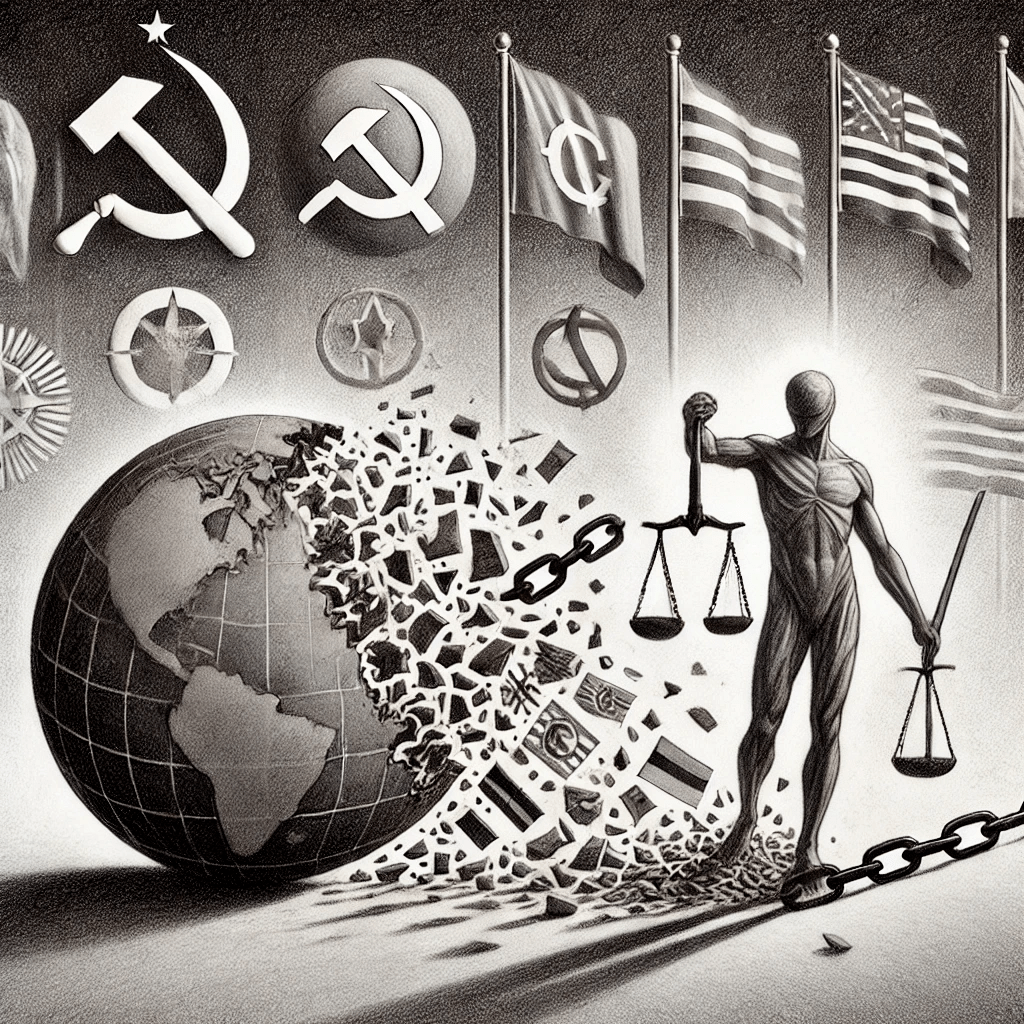
The 20th century was defined by big ideas, big “isms.” It was the century of ideologies. Communism, socialism, liberalism, liberal democracy, fascism—all these systems rose, flourished, and, for the most part, imploded. It was an era where nations didn’t just build economies or form governments; they constructed entire identities around these grand ideas, each convinced it held the answer to human progress. And it’s hard to deny: ideologies fueled revolutions, wars, alliances, the Cold War. They shaped the world map. For most of the 20th century, geopolitics was a battleground of competing doctrines.
But as the century turned, so did the tide. By the late 1990s, with the Cold War firmly in the past and the Soviet Union dissolved, the ideological fervor began to feel dated, stale, even unnecessary. Russia and China, both bastions of old ideological regimes, began adapting to a world where strict adherence to any single ideology seemed limiting. They saw an opportunity to pivot, to move beyond the confines of ideology-driven policy, and to focus instead on mutual respect, common prosperity, and sovereign autonomy. They were embracing a new era—a post-ideological era—with a kind of openness that looked ahead rather than back.
Yet in the West, especially in the United States and Western Europe, the grip of 20th-century ideology lingered. While countries across Asia, Latin America, and Africa adapted to new realities, the US and its allies kept clinging to the idea that liberal democracy—Americanism, if you will—was the pinnacle of political evolution. They interpreted the end of the Soviet Union and the changes in China as proof of their own supremacy. In their minds, liberal democracy had “won” the ideological war, and it was only a matter of time before the rest of the world fell in line.
That belief turned dangerous. It fueled a crusading mindset, leading to military interventions across the globe. Serbia, Iraq, Libya, Syria, Ukraine—millions have died because the US and its allies couldn’t shake off the idea that the world needed to be reshaped in their image. Each conflict was framed as a fight between good and evil, between “freedom” and tyranny, all in the name of spreading liberal democracy, though for the people on the ground, it often meant nothing but devastation.
But if the last two decades have proven anything, it’s that this vision is out of touch with the reality of today’s world. People don’t want to be shoehorned into ideological frameworks set by far-off governments; they want autonomy, national pride, and respect for their own cultures. The idea that liberal democracy is some final stage of human government has fallen flat, especially in regions where the very attempt to “install” it has meant bloodshed and chaos.
Enter Trump. Whether you love him or hate him, Trump represents a shake-up, a disruption of the establishment mindset that’s been stuck in the ideology of “American exceptionalism” and liberal democracy. A Trump 2024 win isn’t just about American politics; it’s the final breath of an era that’s been on life support for far too long. If anything, it marks a breaking point—the American hubris, the idea that the world needs US ideology, has finally admitted defeat.
What does this mean for the world? Nations can finally be nations, people can be who they’ve traditionally been. We’re stepping into a world with no place for grand ideologies. No universal values, no doctrine to export. Only national pride, culture, and mutual respect. The time for one nation forcing its values on others has passed. This is what a Trump win signifies—not just an electoral victory, but a symbolic end to a global era ruled by ideology.
 Yego’s Chronicles