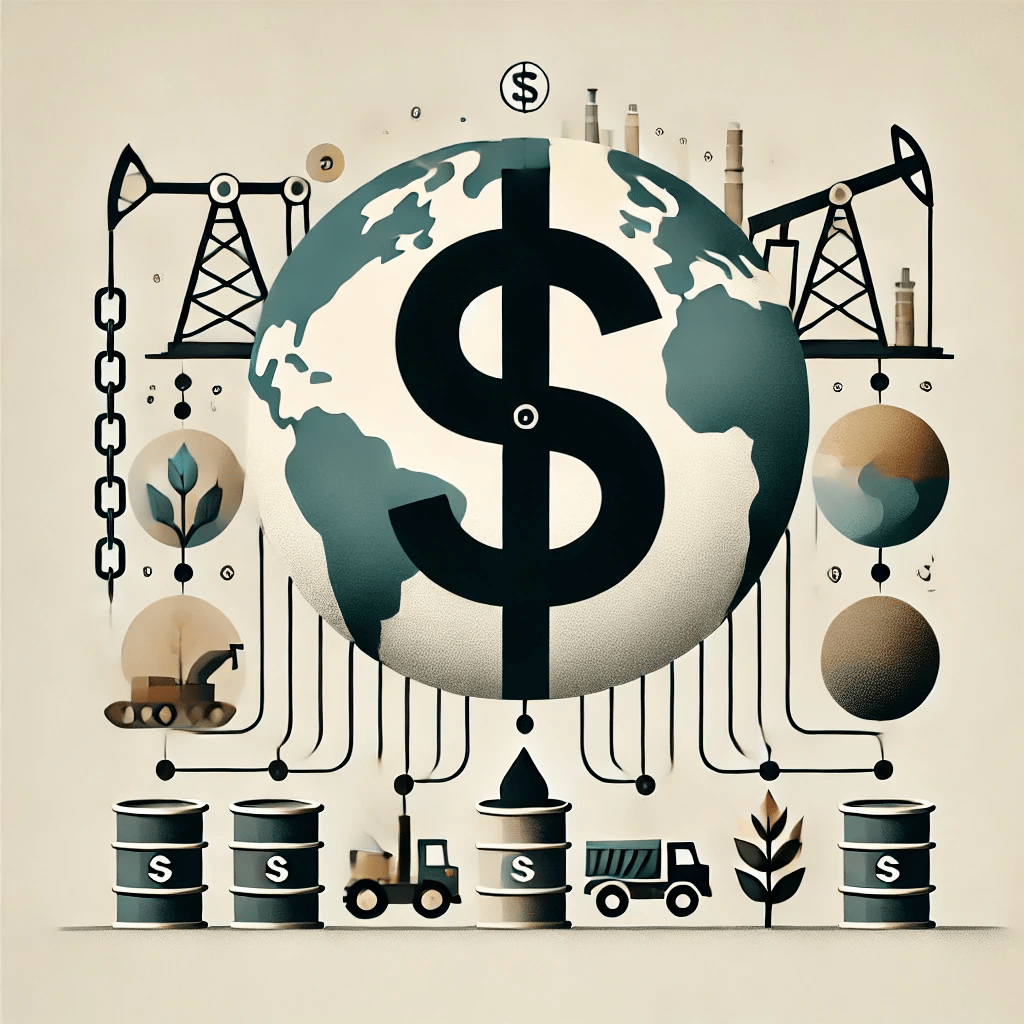
When people think of wealth, their minds often gravitate toward the amount of U.S. dollars (USD) a person or a nation possesses. This perception is no accident. The ones in charge of printing USD—the United States and its Federal Reserve—have every reason to want the world to equate wealth with their currency. For them, it’s not just about financial dominance; it’s about control. Poor nations have learned, through harsh experience, that a lack of dollars often leads to disaster. Meanwhile, the rich nation benefits from this deeply ingrained belief, playing a cunning game while the poor nations, powerless and brainwashed, remain trapped in a system not of their making.
But what is real wealth? For nations, true wealth isn’t stacks of paper currency. It lies in natural resources—fertile lands, vast oil reserves, mineral wealth, forests, and fisheries. The dollar, without the backing of something tangible and solid, is ultimately just paper. Its value depends on global faith in its power—a power carefully cultivated by the United States through economic and political coercion. However, as cracks in this system grow more apparent, the question of what constitutes real wealth becomes increasingly urgent.
The Trap of Natural Resource Riches
Natural resource-rich countries fall into two distinct categories:
1. Resource-rich and “wealthy”: These nations are considered rich based on their USD reserves—for example, Saudi Arabia and Qatar.
2. Resource-rich but poor: Nations like Venezuela, Angola, Gabon, and Nigeria are resource-rich but lack significant USD reserves, often remaining in poverty despite their natural endowments.
At first glance, these two classes seem starkly different. In reality, they are both victims of the same trap: the USD-dominated global economic system.
The Plight of “Wealthy” Resource Nations
For countries in the first category, their wealth—measured in USD—comes from selling raw materials, such as crude oil or unprocessed minerals, in exchange for dollars. Ideally, these nations would prefer to refine their resources and sell high-value downstream products, keeping more wealth within their economies. But the system discourages this. In the petrodollar economy, for example, countries like Saudi Arabia are essentially forced to sell crude oil in its raw form to keep the USD-dependent machinery running. The lack of industrial infrastructure and the pressure to maintain dollar reserves prevent these countries from breaking free of this exploitative dynamic.
The Plight of Resource-rich but Poor Nations
For the poorer resource-rich countries, the situation is even more dire. To develop their economies and exploit their resources, they must borrow USD—usually from Western-controlled institutions like the International Monetary Fund (IMF). These loans come with strings attached: structural adjustments that benefit the creditors and policies that ensure repayment at the expense of national development.
The U.S. Federal Reserve manipulates interest rates, creating a cycle of debt that is almost impossible to escape. Poor nations borrow when interest rates are low, but as soon as deals are signed, the rates rise. Repaying the loans becomes unmanageable, forcing these countries to open their economies to foreign exploitation. Western companies step in to control their resources, completing the cycle of dependence and ensuring these nations remain firmly under USD control.
China’s Checkmate Move
Now imagine an intriguing scenario. China approaches a country like Saudi Arabia, home to billions of dollars sitting idle in Western banks, earning minimal returns. China makes a compelling offer:
“Lend us your unused dollars at an interest rate slightly higher than what the U.S. Treasury offers. It’s a safe, low-risk deal for you.”
The Saudis, eager to put their dormant wealth to work, agree. With billions of borrowed dollars, China turns around and lets the resource-rich but poor nations borrow it, on this condition:
“Take these dollars as a loan and use it to pay off your debts to the U.S. Once you’re debt-free, use the remaining funds or borrow more dollars from us to invest in your economy—build infrastructure, develop your industries, and unlock your true potential. Unlike the U.S., we do not control the dollar, and our loan terms are independent of the Federal Reserve’s manipulations. If you can’t repay the loan, no problem. We’ll accept payment in natural resources—soybeans, crude oil, beef, or other goods.”
What a brilliant idea! China borrows dollars from the Saudis, then immediately lends the dollars to poor countries. If they can’t pay China back, no problem! Pay me with your resources.
Now I know what you’re thinking: “What do you think the Saudis are, fools? If this works they will have no need for China, for they themselves can lend dollars directly to the poor countries that need dollars!” But you’re wrong. Suppose the poor countries have trouble paying back the loan, would the Saudis agree to take raw materials as a type of payment? Of course not! What would the Saudis do with materials for which they lack the industry and technology capabilities to make use of? But being the factory of the world, this is not a problem for China!
This strategy disrupts the USD-based global order. Poor nations free themselves from the crushing grip of Western financial institutions, gaining breathing room to chart their own futures. For China, this approach not only builds economic and diplomatic ties but also creates a counterweight to U.S. dominance. Hence the checkmate.
The Dawn of Real Wealth
The implications of such a scenario are profound. By shifting the focus from USD reserves to real wealth—natural resources and the ability to utilize them—countries begin to break free from the USD trap. No longer shackled by debts dictated by the Federal Reserve, resource-rich nations can reclaim their agency.
The U.S.-led financial system relies on maintaining the illusion that wealth equals USD. But as nations start to realize the true value of their resources and seek alternatives to the dollar, the foundations of this system begin to crumble. For those who have been exploited for decades, it’s payback time. The cunning rich nation may soon face a reckoning, as the victims of its scheme find new ways to reclaim their wealth and sovereignty.
 Yego’s Chronicles