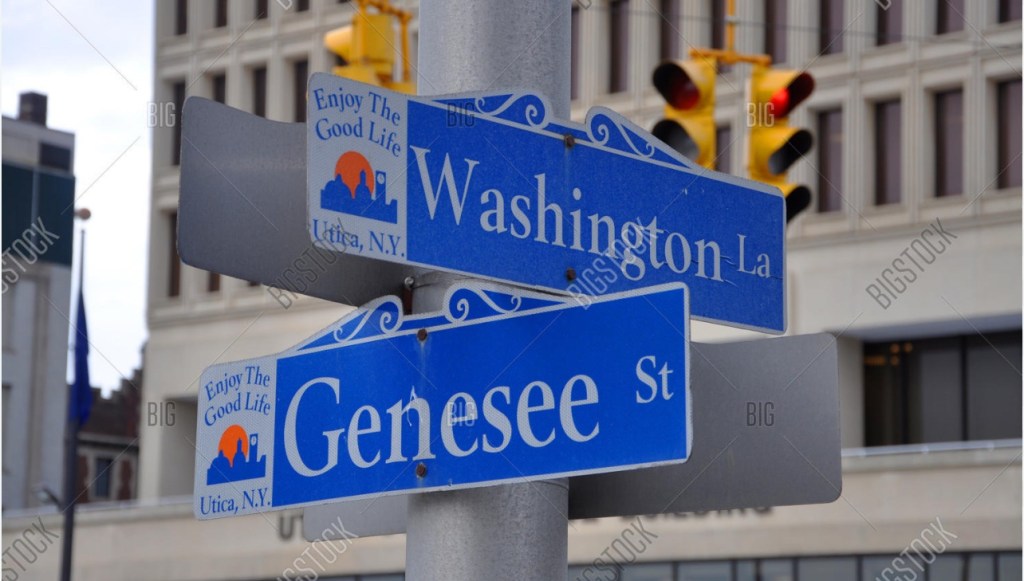
It is a peculiar fact that many towns in New York State have a street named “Genesee.” These “Genesee Streets” are almost invariably the oldest and most central streets in these towns—main streets in the truest sense of the term, not the modern, cluttered kind of “commercial drive.” But why are these streets called “Genesee Street”?
The popular explanation, repeated by town officials, local historians, and bloggers alike, is that the name “Genesee” comes from the Seneca language, and that in the Iroquoian tongue, it means “beautiful valley.” This explanation, widely accepted, is repeated as fact without scrutiny. I argue that it is false, a mere fiction that has persisted through mindless repetition. The true origin of “Genesee” lies not in the Seneca language, but in the Bible—specifically in the Book of Genesis.
The Case for “Genesis”
Let us begin with the meaning of the word Genesis: it means “the beginning.” In all the towns where there is a Genesee Street, this street is always the first and oldest street, the foundational street around which the town was developed or expanded. What better name for such a street than one evoking beginnings and origins?
Consider also the cultural and religious context of early settlers in upstate New York. These were God-fearing, Bible-reading people who knew Scripture by heart. The first book of the Bible is the Book of Genesis, the story of creation, of beginnings. Naming the main street after the biblical “Genesis” would have been as natural to these settlers as breathing.
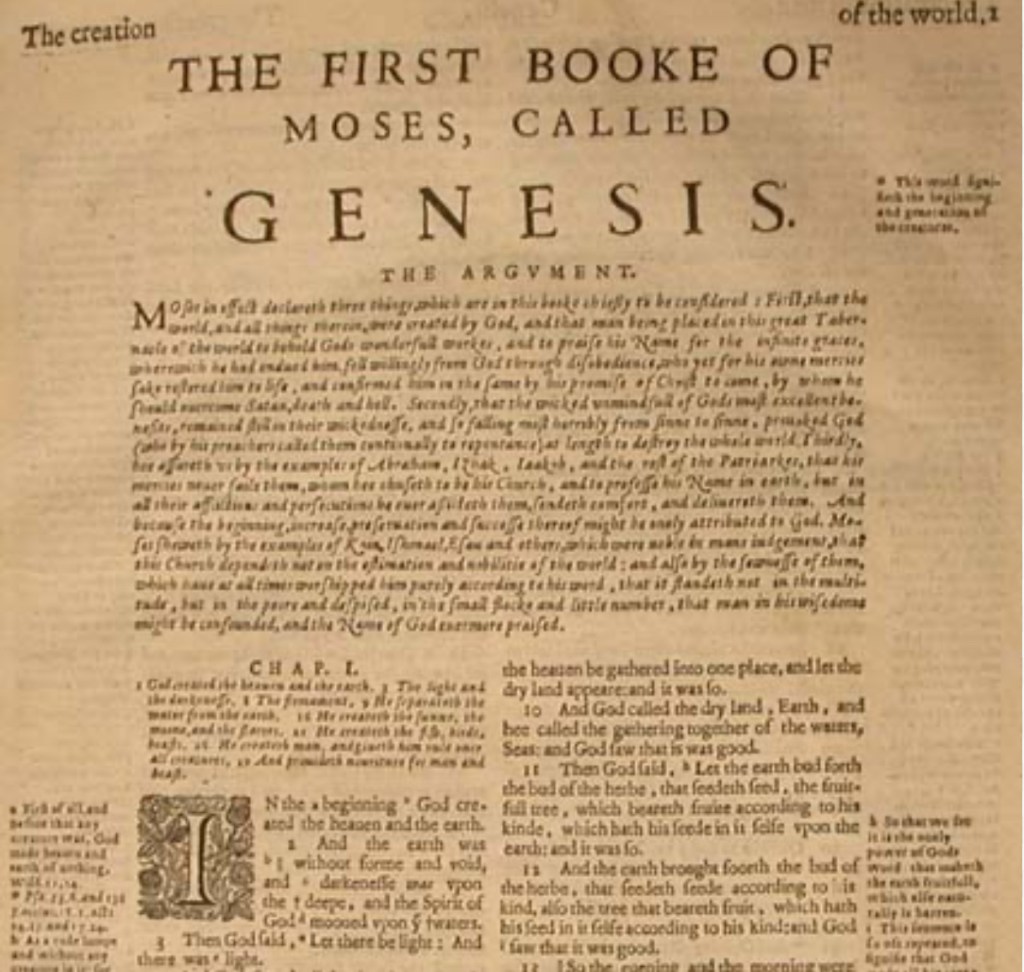
The word Genesis itself comes from the Greek word γένεσις (génesis), meaning “origin” or “creation.” This etymology underscores the profound significance of the term in a religious context, especially for settlers who relied heavily on the Bible as a moral, cultural, and even linguistic compass.
The Pronunciation Anomaly
The pronunciation of “Genesee” further supports this hypothesis. For English speakers, the instinct is to read the second “e” as silent, rendering something like “gene-see.” Yet “Genesee” is pronounced “ge-ner-see.” Such a pronunciation anomaly makes sense only if the name originates in a foreign language, such as Greek, where vowels are distinctly pronounced. The settlers, familiar with the biblical Genesis and its Greek roots, may have deliberately rendered the pronunciation to mirror its foreign, sacred origins.
Greek Influence in Upstate New York
Upstate New York towns boast a surprising number of Greek-derived names. Utica is one prominent example. Others include Ithaca, Syracuse, and Corinth. The prevalence of Greek names suggests a cultural milieu where Greek and biblical references were deeply intertwined. Why should “Genesee” not follow this same pattern, deriving from the Greek-rooted Genesis?
Debunking the “Seneca Origin” Myth
Now let us address the myth of the Seneca origin. It is true that the Seneca people inhabited much of the land in upstate New York before European settlers arrived. But ask yourself this: Did the Seneca have a written language before encountering European settlers? They did not. This means that any transcription of a Seneca word was done by a white man, and white men in those days were often deeply familiar with the Bible.
Imagine the scenario: A settler, armed with his Bible, asks a Seneca, “What do you call this place?” The Seneca responds with a word that sounds foreign to the settler’s ear, something the settler attempts to record. Subliminally, the settler’s mind reaches for something familiar—a word from the Bible. What he writes down is not a faithful transcription of the Seneca sound, but an approximation filtered through his own cultural and linguistic lens. And what could be more familiar to him than the word “Genesis”?
This subliminal process explains how the name “Genesee” could have been inscribed not as a Seneca word meaning “beautiful valley,” but as a biblical reference. It was not an accurate representation of the native tongue, but an echo of the settler’s own religious and cultural framework.
The Only Reasonable Conclusion
The name “Genesee” does not come from the Seneca language. It comes from the biblical Genesis. The streets called “Genesee Street” in towns across upstate New York are so named because they are the foundational streets—the beginning streets. The settlers who named them were not thinking of “beautiful valleys”; they were thinking of creation, origin, and the foundational text of their faith.
In conclusion, the widespread belief that “Genesee” originates in the Seneca language is a myth born of repetition and unexamined assumptions. The evidence points instead to the Bible, to the Book of Genesis, and to the profound influence of Scripture on the early settlers of New York State. Genesee is Genesis, plain and simple.

 Yego’s Chronicles