1. I Can Fly
For a time, for perhaps eight or nine years straight, I was constantly shuttling between Shanghai Pudong and New York Kennedy airports. At least four round trips a year. If a flight got delayed because of a connection, a snowstorm, or because I got drunk in a bar and missed the flight, or a virus attack disrupted the global network—or for whatever other reason, flights were canceled, and there were no planes available, I’d be stranded somewhere: Newark, Frankfurt, Toronto, Tokyo, Detroit, or Atlanta.
Wandering through the airport, I killed time eating, drinking, visiting the restroom countless times. Still, there was so much time to waste. I browsed the internet until I reached its very edge, where any further exploration would plunge me into the black abyss at the universe’s border. Sometimes, I’d find a chair to lie down on, a fake potted plant by my side, and a bright lamp overhead. Passersby were numerous, not many looked fully human.
Closing my eyes, I pretended I was lying in darkness, imagining I was the only person in the world—just me, breathing, with my own heartbeat. The world did not exist, only my own thoughts.
As the lights dimmed, Lisa’s poised figure would appear. Tall, with jet-black hair flowing down to her waist, her face was shrouded in mystery. Sometimes she emerged radiant from a subway station in the early morning on a workday, other times, she sat by the window in the evening, her expression touched by a faint trace of melancholy.
In such moments, I felt powerless. I wanted to see Lisa happy, to see her content, I wanted to see the way she watches children playing badminton under a streetlamp–a Lisa at peace with the world, her face exuding tranquil delight.
2. United Airlines
Most of the time, I flew United Airlines. Why? I have no idea. The first time I took United to the U.S., the road to Beijing Airport was still a narrow country dirt path. We had to slow down if a car came from the opposite direction.
On that flight, a female PhD student from the University of Minnesota sat next to me. She was conducting research on Miao culture in Guizhou. Slim, with a petite face, she had almost finished gathering materials for her dissertation and was heading back to the U.S.
As soon as the cabin lights dimmed, she poured several mini bottles of liquor into her cola cup, added some ice, and downed it all in no time. I’d never seen a woman drink like that—it startled me.
At the time, I didn’t know much. But if you asked me now, I’d tell you confidently: she wasn’t of German, Polish, or French descent—she was pure British. Her appearance reminded me of the woman who wrote Wuthering Heights.
I don’t know where Lisa was at that time. Perhaps still in kindergarten.
3. A Flying Philosopher
What does travel mean? Just look at the people around you. Everyone is eager to rush from point A to point B. What were they doing before reaching point A? Not necessarily saving time. What will they do once they get to point B? Waste time again. So why the rush between A and B?
But people don’t think like that. They see any time spent between these two points as wasted time. Before the plane even takes off, they’re scrambling for overhead bin space. Before it lands, they’re already standing, anxious to grab their bags. Their phones buzz non-stop with WeChat notifications. Let them scramble—it doesn’t matter to me.
While others fought for overhead storage, I sat in my seat, eyes wide open, back straight. It was the only way I knew to stay calm. Sitting upright like a soldier’s rifle, my mind was filled with thoughts of Lisa.
I checked the time—it was the last class of the day. Soon, it would be Lisa’s time to head home, walking westward as the city’s hustle and bustle subsided. Evening, the gentlest time of day, painted the sky with a heart-wrenching sunset. Anticipation soothed the soul. For me, and perhaps for Lisa too.
As the plane flew through the night, the lights dimmed. Most passengers slept, some watched movies. The once-crying child had quieted down.
I went to the back of the cabin to buy a drink. Only one flight attendant was on duty.
“How can I help you?” he asked.
“Two mini bottles,” I replied, handing him my 20 dollar bill.
“I can do better than that! I’ll give them to you for free,” he said. “Whiskey or brandy?”
“Whiskey,” I said.
He mixed the drink and handed it to me. I took a sip. Standing there, under the dim lights, we chatted.
“Where are you headed?” he asked.
“Upstate New York,” I said.
“Ah, I have a cousin making a living there,” he said.
“That’s great,” I replied.
“What do you do?” he asked.
“I do philosophy for a living,” I said.
He laughed, teasing, “You’re joking!”
“No, I’m serious. I’m really a philosopher.”
He laughed again. “Get out of here!” still thinking I was kidding.
In the darkness, I groped my way back to my seat. Settling in, I took another sip, leaned my head back, and closed my eyes.
In the darkness, I saw Lisa again: poise, statuesque, with her long black hair, and her enigmatic Mona Lisa smile. I remembered—it had been her birthday a few days ago. Some remembered, some didn’t.
“Happy birthday, Lisa!”
4. Kumarajiva
Once, on a flight from Pudong back to the U.S., I arrived at my seat and saw a book sitting there: The Tibetan Book of the Dead.
How strange, I thought. Who would bring such a book onto a plane? Wasn’t that a bit ominous?
The woman in the window seat picked it up and said, “Sorry, it’s mine!”
“No problem,” I replied.

We chatted off and on during the flight. She was from Chengdu, heading to New Jersey to visit a friend. She had big eyes and a round face, not at all vulgar in appearance. Around forty years old, she didn’t look like someone married with a family, and she had a certain charm. But her English was non-existent, and she seemed to love reading literary and artsy stuff. She gave me a few Chinese blog addresses, though I didn’t remember them.
The Tibetan Book of the Dead describes what happens after you die: first you transition to an intermediate state, a limbo-like space neither above nor below, much like a dimly lit bus-station waiting room. This “waiting room” is called the bardo. If your family hires monks to chant sutras on your behalf and pays the monks generously, your bus arrives on time to ferry you to the other shore.
Once there, you line up to return. Whether you can make it back at all—or as a man, in a skirt, a millstone-turning mule, an alley cat, or a lapdog—depends on how much incense your family burns for you at the temples during your absence, or whether they feed bread to the fat fish in the park ponds.
The term bardo was famously translated by Kumarajiva. And who was Kumarajiva? Let me tell you: he was like God Himself. If he declared that 2+2=5, then it was 5. If he said, “Lisa will always be happy,” then Lisa would indeed live a happy life.
No matter how powerful Kumarajiva was, I still didn’t want to sit next to The Tibetan Book of the Dead. What was this Sichuan lady thinking? Couldn’t she bring a different book onto the plane?
5. Lisabetta and the Pot of Basil
The flight from New York to Shanghai is far too long. I never look forward to it. To pass the time, I listen to audiobooks.
Once, I bought The Decameron and listened to it on the flight.
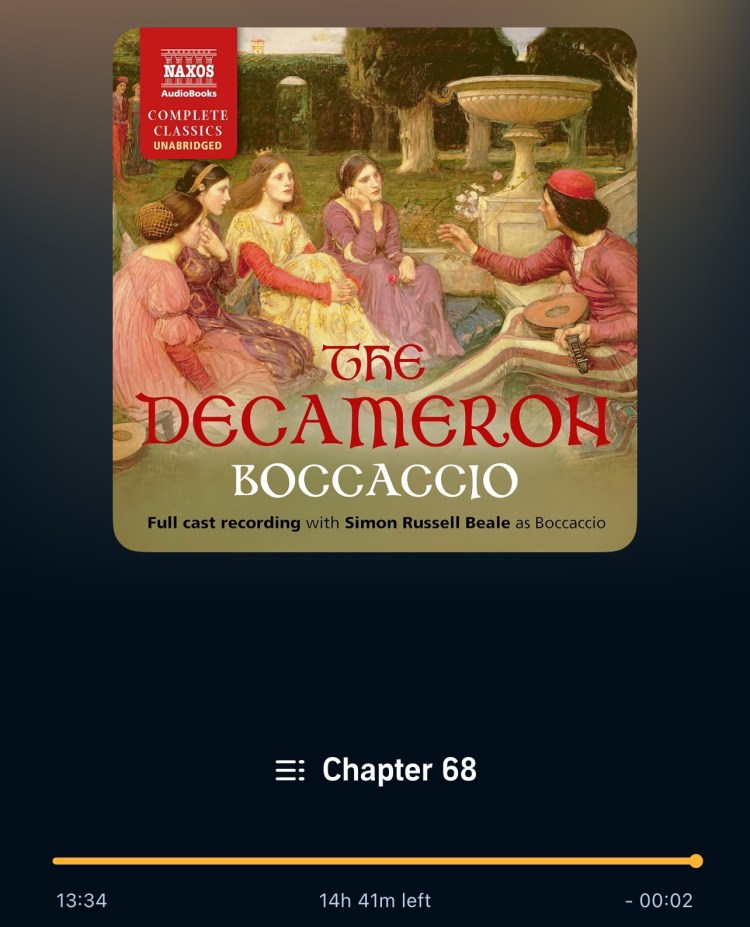
I made it to Chapter 68, but there were still about 15 hours left before it was done. Unbelievable!
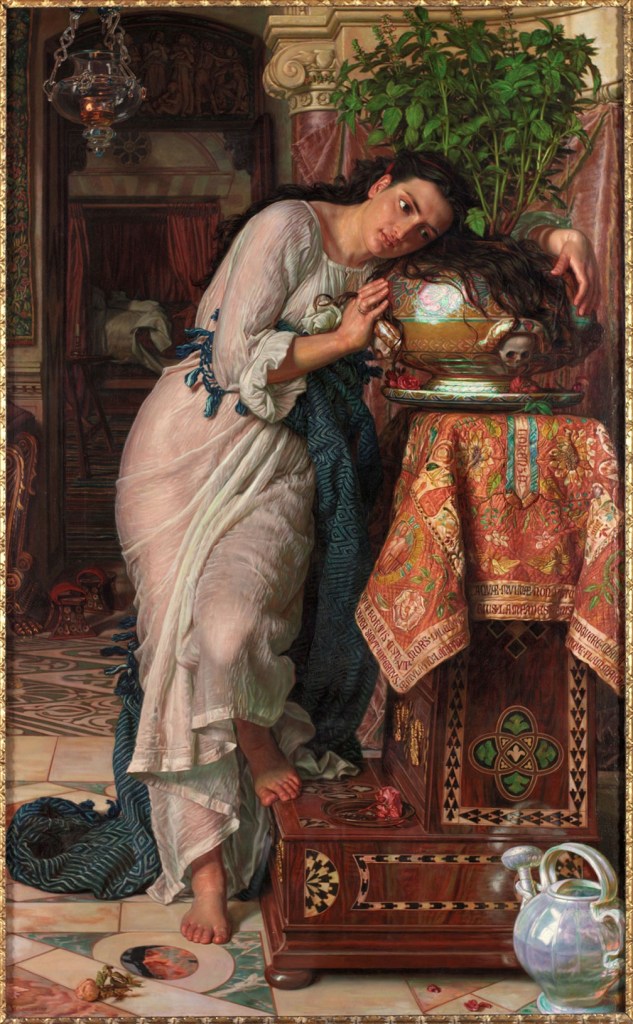
The most moving story in The Decameron has to be Lisabetta’s tale. Beautiful Lisabetta fell in love with a young worker named Lorenzo who was employed by her family. But her three snobbish brothers disapproved, considering her love a disgrace to their household. They lured poor Lorenzo to a remote spot outside the city and murdered him.
With the help of her maid, Lisabetta retrieved her lover’s head and buried it in a flower pot on her windowsill. She planted a plant of basil in the soil and watered it with her own tears. When she cooked pasta, she would pluck a few leaves to add to the pot. Alright, I admit—I made up the last two sentences. Lisabetta didn’t cook.
In Italian, Lisabetta is a shortened form of Elisabetta. The same name takes on different spellings in various languages: in French, it’s Èlise or Lise; in English, it’s Lisa—all nicknames for Elizabeth.
6. Parsley, sage, rosemary, and thyme
I have a fondness for culinary herbs: parsley, sage, rosemary, thyme, and basil—I love them all. I grow them myself or buy them from the market. Basil, in particular, is one of my favorites. In the summer, I grow it in the ground or in pots. I enjoy its fresh fragrance and use it in cooking—adding it to pasta sauce, tossing a few fresh leaves into a vegetable salad, or making it into salad dressing.
The herb I use most often is parsley. What’s left of my own parsley has been mostly ruined by the harsh winter:

I sprinkle finely chopped parsley over grilled fish, shrimp, potatoes, or pork chops.
Rosemary, on the other hand, I grow for its looks and because it comes from the Middle East, the homeland of Jesus Christ. I keep it for its aesthetic appeal and occasionally use it for lamb dishes. Here’s a photo of my rosemary:

Speaking of herbs, here are the first two lines of a song y’all know, Scarborough Fair, sung the world over:
“Are you going to Scarborough Fair?
Parsley, sage, rosemary, and thyme.”
 Yego’s Chronicles