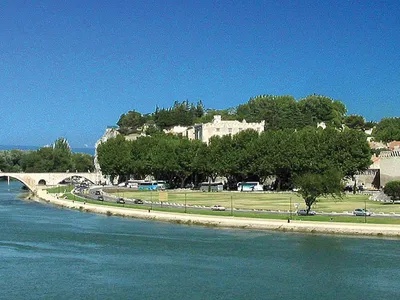
“O quam cito transit gloria mundi.” Thomas à Kempis
Lugdunum
The Rhône River originates in the Alps. If you travel from the divine city of Lug to Geneva, with the swaying train moving northeast while the Rhône River flows southwest, you’re traveling downstream to upstream, going from the present to the past, seeing the effect even before there was a cause, with the future preceding the past. It’s a reversal of cause and effect, a reversal of time. You start to get this strange and uncanny feeling, hard to put in words.
Since antiquity, time has been compared to a river. If you think about it even a little, you’ll realize that the people who make this analogy are the ones drifting downstream on boats. It’s like it never occurred to them that there could be such a thing as going upstream in this world. All they thought about was how water flows downward: the further it flows, the later it gets. They never considered how people could walk upstream, where the further they go, the earlier it becomes.
It started with one person saying, “The long river of time.” After that, all the unthinking people followed suit, repeating it so often that it became a truth. Even Confucius fell for it. Bathing in the Yi, he stood by the river and said, “Time passes, like this river.” Confucius was a man of benevolence. Was he also a man of wisdom? I’ve me doubts about that, so I do.
Between God’s property and Ambérieu-en-Bugey, there are endless pastures. Vineyards. Farmlands. Along the banks of the Rhône River in late autumn, the greenery still thrives. Why is it always the Rhône River, as if it were a shadow that follows me everywhere? The world may be small, but this kind of coincidence feels a little too much. I’ve been to the sources of a few great rivers. I have a few dried-up memories of them. Dry as desert bones, which might even hold more flavor than those memories.
I once went to the Yellow River. I still remember standing at its source. A few tiny streams converging. Someone wanted to take a picture of me. I said, “No, no! Don’t bother!” I didn’t feel a thing. Leave that to the people writing textbooks. It was just me and a few others—people I met by chance, strangers drifting in and out of my life, like some abstract concept. If there isn’t love, if there isn’t a frail girl by my side, someone with soft lumps here and there, then don’t even talk about the Yellow River’s source—I wouldn’t bother going to heaven either.
It was like a meeting. A teacup in front of me. Someone coming by to pour tea. A while later, someone else came to top it off. If you drank a little, they’d refill it. If you didn’t touch it, they’d bring a fresh cup. And the leader speaks. Delivering important directives. Uh, important directives. Uh, directives. It’s like they’re saying, “Some place, some person, some moment, some thing.” All these “somes” don’t connect with my soul in any way. So I don’t care, I don’t pay attention.
It’s like listening to someone say, “A man can’t be taller than himself, a ruler can’t measure longer than its own length, big things are bigger than small things, far places are farther than near ones, a thing is that thing, and not something else.” Makes me want to doze off. Knowledge like that—I’d rather not have it. I don’t envy it. It’s like hearing thunder and asking the guy with the keen ears, “Where’s the thunder coming from?” And he says, “Thunder comes from where thunder is.” You just want to smack him.
If you tell me, “I went to the Yellow River’s source today. Stood by three tiny streams. Want to see the picture? Got three random folks to take it for me,” then all I’d think of is a dry riverbed in the desert, piled high with centuries-old white bones, gnawed on by who knows how many stray dogs, and now left to rot on the internet.
A strange river. Originates in the Swiss Alps. Called the Rhône. Flowing west into Lake Geneva, it changes its name to Lac Léman. Exiting from the lake’s southwestern end, it changes its name back to the Rhône. Yesterday, we went downstream. It was the Rhône. Today, we headed upstream. It’s Lac Léman. The same place, yet two different places. Feels so strange.
You protested: “Can we not talk this way? You confuse me. Say something warm, will you?”
“Alright, I’ll try my best: I love you.”
“Not that.”
“Okay, one more try. See if you like this: No one can really say why, in your life, there is a river that walks alongside you. Why not some other river? No one can really say why, in your life, there is a person who walks alongside you. Why not some other person?”
You stayed silent, slowly turning your face toward the window.
Nowhere to Go, Everywhere to Be
My love, how could this be a waste? How could traveling ever be a waste? Even if it means waking up early, even if the sky is still dark—traveling from the lands of the sun god to Geneva, how could that possibly be a waste? I love you, my darling! You don’t believe in Protestantism, but you must have at least heard of Martin Luther, John Calvin. You’re not into philosophy, but surely you’ve heard of Jean-Jacques Rousseau. You’re not a revolutionary, but you must know Vladimir Lenin and Nadezhda Krupskaya. The millions and billions of years of geology mean nothing to you, nothing to me either, but you’ve at least heard of the Jurassic, haven’t you? No? Then surely you’ve heard of dinosaurs?
When I came back, didn’t I bring you a little brown bear? Didn’t you place it by your pillow? The little brown bear isn’t a dinosaur, but just like a little dinosaur, it’s adorable, huggable. Aren’t the bear and the dinosaur the same in that way? Something to hold onto when you sleep? So tell me, my darling, how could going to Geneva possibly be a waste?
Darling, I know, going to Geneva means waking up early. The sky still dark, the endlessly repaired road with its flashing orange warning lights. A French policeman walks past; you can’t see his face, and he can’t see yours. A North African immigrant woman, burdened with heavy thoughts and heavier loads, walks by; she can’t see you, and you can’t see her. But the train station is just ahead, not far now. Just a few steps more. Give me your hand, so you can hold onto me. The road here is terrible. It’s been months, and they’re still fixing it. Who knows when they’ll ever finish?
In the station hall, the scent of American coffee and croissants fills the air. The intermittent announcements echo, mixing with the sounds of wet sneakers shoes scuffing against the slick floor. Children’s screams. The chaotic ebb and flow of travelers, as disordered as the tide itself.
You woke up too early, your mind still foggy. In a place like this, your senses are all working overtime, leaving your head spinning, as if you’d done drugs the night before. Why would a train station be called God’s Property? No one knows. Maybe only the French know. Maybe not even the French know.
Where do you catch the train to Geneva? At Part-Dieu. Part-Dieu sounds like “afraid of losing it” in Chinese. What does Part-Dieu mean in French? It means God’s Property. But no one thinks of it that way. The French don’t. Non-French speakers don’t. My girlfriend doesn’t either. It’s just a train station—what does it have to do with God? Or property, for that matter?
“So where do you catch the train to Geneva?”
“Ah, just go to afraid-of-losing-it!”
Running around in God’s Property. The ticket office is this way! The café is that way! Our platform is over here! Thirty minutes until the train leaves! Board through this passage! Come back down through that one!
Coffee’s bought. Just a few minutes left before boarding. Come here, darling, come closer! Let me get a good look at you. Look at your little face. Where did that cold sore come from? Why are your eyes red at the corners? You did it! No, that’s not true. Was it me? Wasn’t me, was it? I don’t even know. Probably was me, wasn’t it?
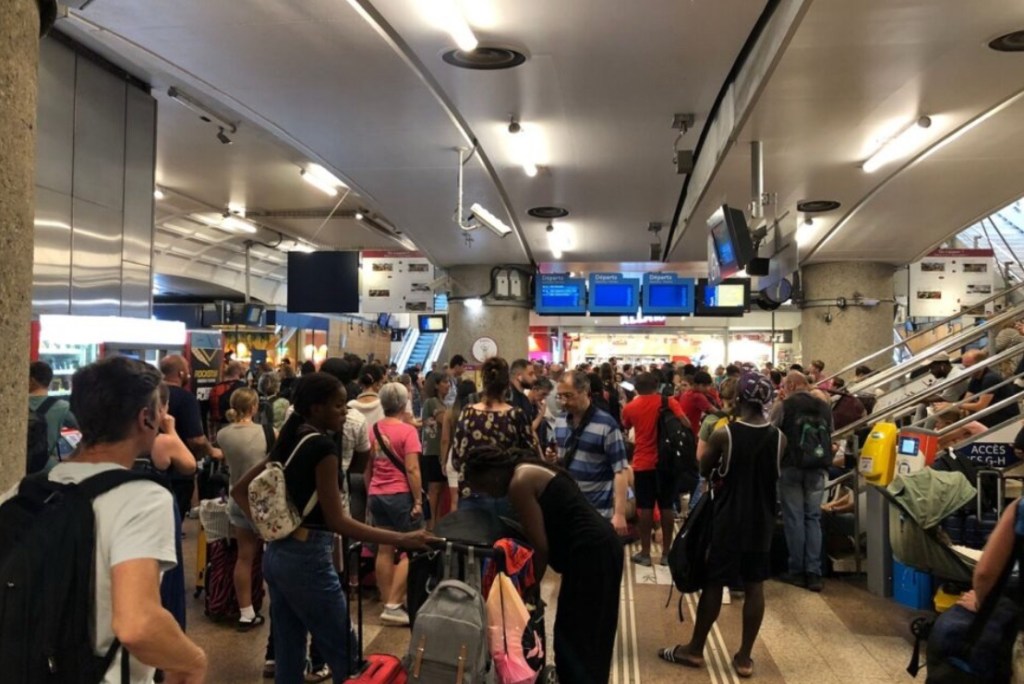
Tell me, why is it that here, it’s always trains? One gets the impression that in France, no matter the time, no matter the place, no matter where you’re headed, it’s always by train. If it’s not a regional train, the French call it TER, then it’s a high-speed train, which they call TGV.
You look across at the people sitting opposite us, who boarded the train with us at God’s Property: a French grandmother and her granddaughter. The little girl is around five or six, a typical French child. From the moment the train hasn’t even started moving, she’s clutching a plastic container of pasta salad, eating. Inside are chunks of ham, cubes of cheese, bits of olives, and spiral-shaped pasta, along with butterfly-shaped pasta. Those small, childlike hands holding a fork, paused mid-air. You can’t guess where that wobbly fork will land next—her own eye, her forehead, or the food in the container. It makes you worry.
When the pasta is gone, the grandmother hands her a piece of baguette. Hard as rubber. The little girl bites down on one corner, her small hands pulling at it with effort. As you watch, you think: No wonder people here have bad teeth. Gnawing on these rock-hard baguettes since childhood—how could their teeth possibly turn out well?
After the train reaches Bugey, the grandmother and granddaughter get off. In their place, a woman in her forties boards with several young children. Her face is thin and sharp, her expression serious. The children, too, are impeccably dressed, their behavior restrained, their manners refined. Once, in Tokyo, I saw a very similar woman on the subway. She had an air of a matriarch about her, leading her whole family into the city. The younger members of her family carried themselves with such grace and propriety that they inspired respect. This new woman and her children remind me of that Japanese family in Tokyo.
Outside the train window, the scenery has changed. White cliffs of the Jura Mountains. Towering peaks. Verdant vegetation. In geology, the term Jurassic takes its name from these mountains. It reminds me of the mountains I once saw in my father’s hometown. Thinking back now, those must have been Jurassic rocks too.
Mont-Blanc
The moment you step out of Cornavin station, you’re on Mont-Blanc Avenue. Why is it called Mont-Blanc? On clear days, if you follow this avenue to its end, you’ll see the famous peak in the distance. And at the end of the avenue? A bridge, also named Mont-Blanc! What else could it be?

Standing at the bridge, to your left is Lake Geneva, and to your right, the Rhône River reappears as it flows out of the lake, rushing westward toward France in a hurry. I pulled her close and asked, “Have you heard of Russell?”
“No.”
“Who is Frege?”
“Don’t know.”
“What is Sinn und Bedeutung?”
“Never heard of it.”
So I pulled her into a proper embrace. “On clear days, darling, from here you can see Mont-Blanc, its snow-capped peak shining in the distance. Russell said, whenever you think of that mountain, the mountain actually enters your mind. But Frege disagreed, saying, ‘No, no! Every thought requires a concept as a mediator.’”
She thought for a moment, then said, “I think this Mr. Russell makes sense. If the mountain doesn’t enter my mind, then what am I thinking of when I think about it? Just a concept of the mountain? Then we’ll never know the mountain itself, only the concept… Can we not talk about this stuff?”
“Sure, sure!” I replied, though I thought she made a very good point. Sometimes, intuition, unclouded by books, comes closer to truth than any theory.
If you stand on that bridge, with your back to the lake and your eyes on the westward-flowing river, you’re faced with a choice: left bank or right bank? Can’t decide? Flip a coin.
Tell me, darling, why is a place worth visiting? What gives it its magic? You don’t have to strain yourself thinking about it. This is just me, thinking it over. Without you, do you think I’d go anywhere? Do you think anyone would? Would anyone feel joy in the journey, delight while there, and lingering pleasure afterward? Would there be any memories at all? Without you—without your heart, your body, and your soul—what place could possibly be worth going to?
Look to your left—that’s Lac Léman. Its waters flow under the bridge, passing beneath our feet, endlessly moving. Flowing toward God’s Property. Flowing toward our home, then joyfully embracing the Saône, hand in hand as they make their way to the Mediterranean. Look closely. It’s the same water. The very same water. Flowing through Geneva, through Lug, through Avignon. Through the sunlit land we visited not long ago—a hymn to life itself.
St. Pierre Cathedral and Rubáiyát
While China’s Emperor Jiajing of the Ming Dynasty was still obsessed with alchemy, John Calvin was preaching in this cathedral in Geneva. The winds of the Reformation, first stirred up by Martin Luther in Germany, were sweeping across Europe.

The winds of reform reached Geneva, then Paris, and eventually Rome, awakening the zeal of devout Catholics. Thus, the Jesuits were born.
Bébé, I’ve never told you this: While Xu Guangqi and Jesuit missionaries were translating Euclid’s Elements in the late Ming Dynasty, Jesuit missionaries also came to my hometown and built the first Jesuit church there. To this day, it’s still used for worship.
St. Pierre Cathedral. This isn’t a Catholic church. No crucifixes. No statues. It’s not a place for prayer. You have no place for prayer. Protestantism and Catholicism—years of war fought over faith.
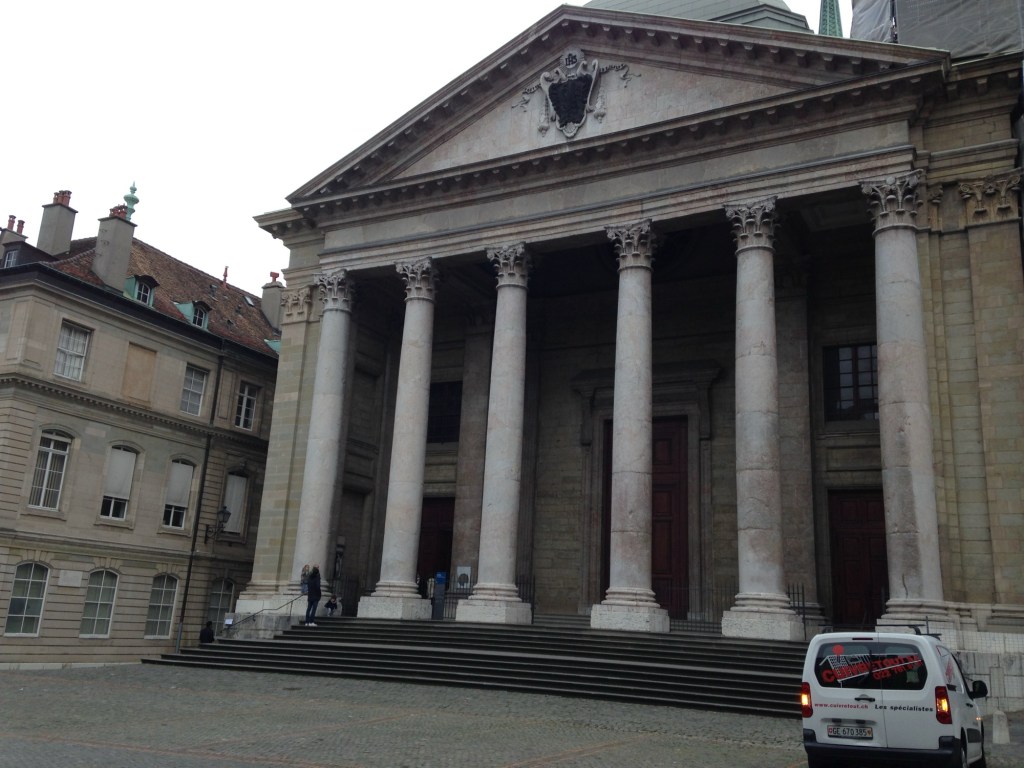
The choir stalls here? Not original. John Calvin and his fellow Reformers had no interest in hymns or rituals, believing they had nothing to do with the soul or salvation. And you can’t say they were wrong.
You grew up in a Catholic family. You’re not Protestant, not Puritan. That’s not your fault. One person enters a Catholic church, another doesn’t. One goes to St. John’s, another to the Jesuit church. One believes, another doesn’t. How much difference is there, really? Does life have an ultimate destination? One says yes, another says no, and yet another says, even if it does, it doesn’t matter much. Does it? Heaven and hell, war and peace, life and death—is the difference all that great? Does anyone know?
By the side of St. Pierre Cathedral, while I lingered in thought, a couple embraced and kissed, and someone else walked away, lost in their own reflection. Which one of them was truly living? What is real life?
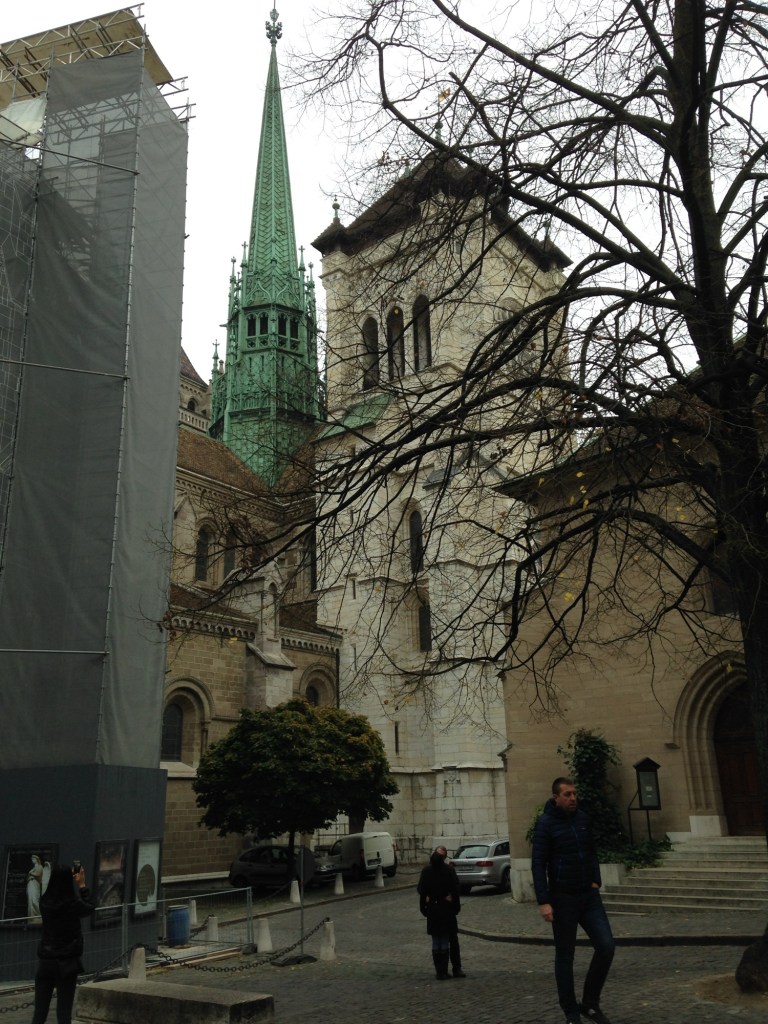
The spire of the cathedral pierces the gray, distant, cold, and unfeeling sky. You tell me, what attitude should I hold? Tell me, how should I think? You tell me, where should I place my heart? Tell me, how should I make sense of it all?
What I should hear, I’ve already heard. What I should read, I’ve already read. Tell me, what should I think? I imagine you must be someone who knows everything, someone who has read all the books of the sages, someone who hasn’t missed a single famous quote, someone who has listened to every sermon of every religion. But after hearing everything, after knowing everything, I turn back to find myself walking the same path I came from.
And then, I remember the Persian poet Omar Khayyám:
Myself when young did eagerly frequent
Doctor and Saint, and heard great Argument
About it and about: but evermore
Came out by the same Door as in I went.
(Trans., Edward Fitzgerald)
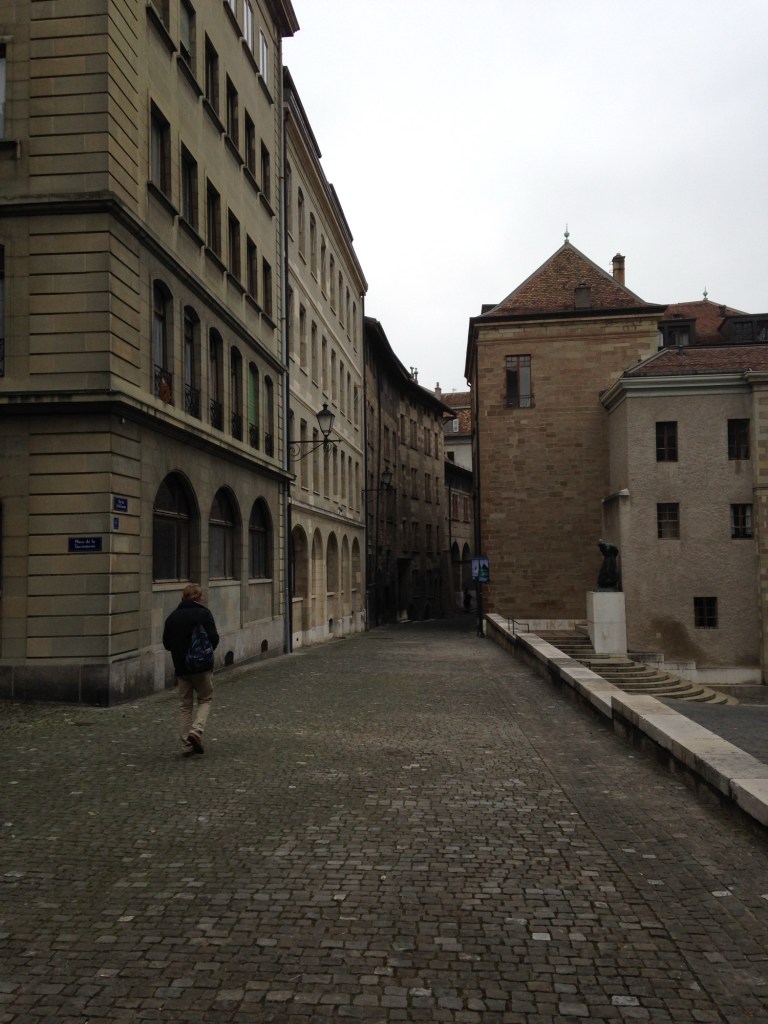
Just outside St. Pierre Cathedral, a stranger walks out, head bowed, footsteps faltering. One imagines he, too, must know these lines from Rubáiyát well.
A Man of Paradoxes
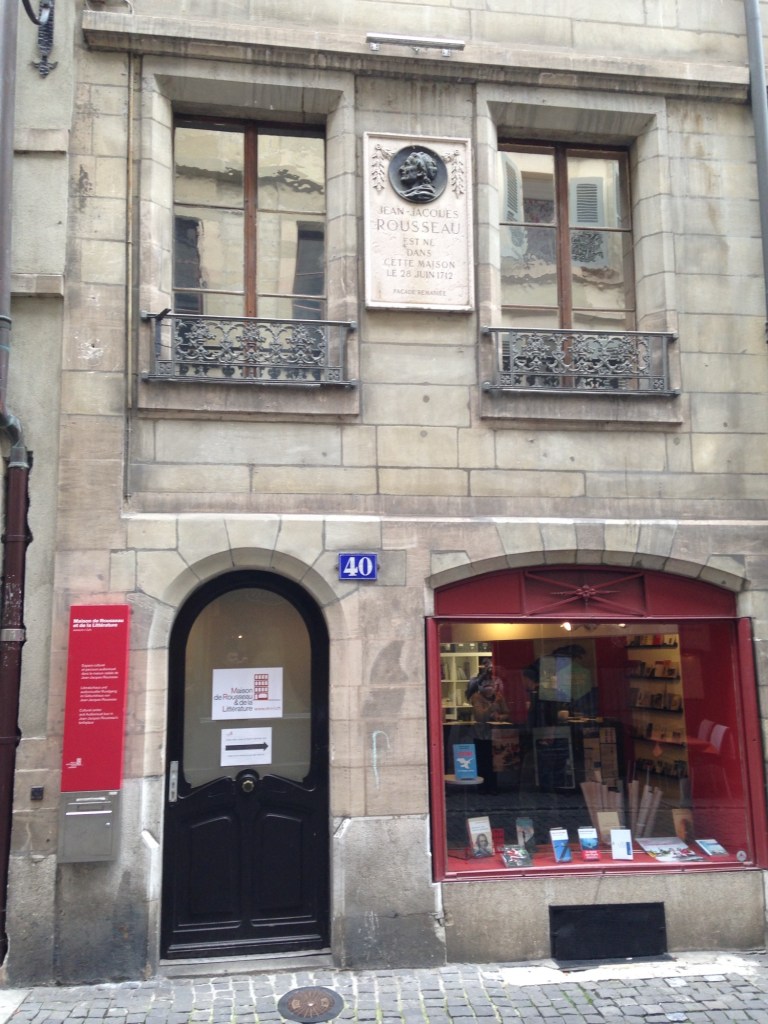
Everyone has heard the famous line: “Man is born free, and everywhere he is in chains.” But how many know that Rousseau was a Genevan? A plaque on the wall reads: “On June 28, 1712, Jean-Jacques Rousseau was born in this house.”
There are countless sages and great minds throughout history. Rousseau isn’t my favorite, but some of his words, I truly love. This one is my favorite: “I would rather be a man of paradoxes than a man of prejudices.”
What is a man of paradoxes? Someone like you and me. And a man of prejudices? That’s the lamppost over there.
Ask yourself, has anyone ever said to you: “Yesterday, you said that, but today, you’re saying this!” If they have, “Congratulations!” you’re not a lamppost. And if they ask again, just tell them: “Because I said that yesterday, today I’m saying this. Yesterday, I thought the Earth was a flat pancake; today, I believe it’s a sphere. Tomorrow, I might think it’s not perfectly round but an ellipse.”
Go talk to that lamppost. It will never contradict itself. Yesterday, it was a lamppost. Today, it’s a lamppost. Tomorrow, it will still be a lamppost.
Yesterday, I asked a lamppost: “Lamppost! Is the Earth flat or round?” The lamppost stood there, perfectly upright, and said: “Straight.”
Today, I asked the same lamppost: “Lamppost! Is the Earth flat or round?” The lamppost stood there, perfectly upright, and said: “Straight.”
If you ask it again tomorrow, it will still stand there, perfectly upright, and say: “… ” (Fill in the blank. This is a test question worth 100 points. No cheating!)
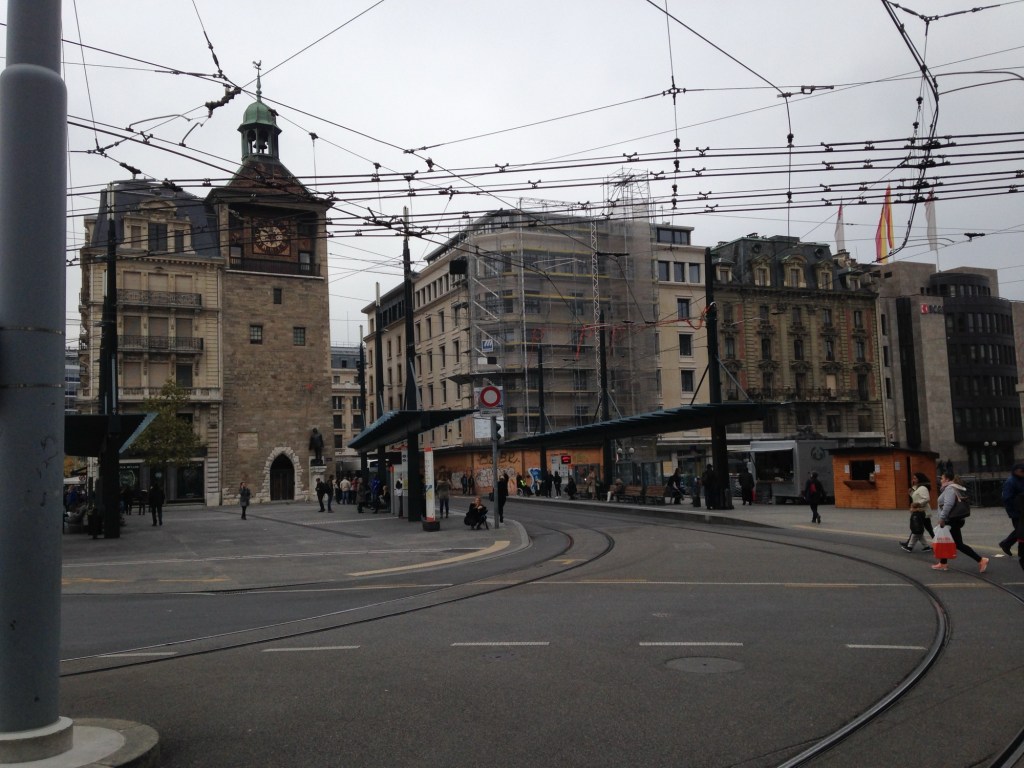
Wow, so many lampposts in Geneva—and all perfectly upright!
But you object. “Rousseau was a misogynist,” you say. “Only Émile is human. Sophie doesn’t count as a person; she’s only fit to serve her man and raise children. Émile gets freedom, and Sophie is born in chains.”
I listen and find you have a point. You think critically, so clearly, you’re not a lamppost.
“Let Comrade Lenin Go First!”
Lenin spent four years in exile in Geneva. The most talented Bolshevik thinker, Nikolai Bukharin, also sought refuge here.

My impression of Lenin comes from Soviet films I watched as a child: Lenin in October and Lenin in 1918. Recently, I finished reading a biography of Lenin by Hungarian historian Viktor Sebestyen, published in 2017. At first, I thought it would be just another biography—read it, put it down, and forget it. But a week passed, and I couldn’t shake it. Something was troubling me. Another week passed, and it still lingered.
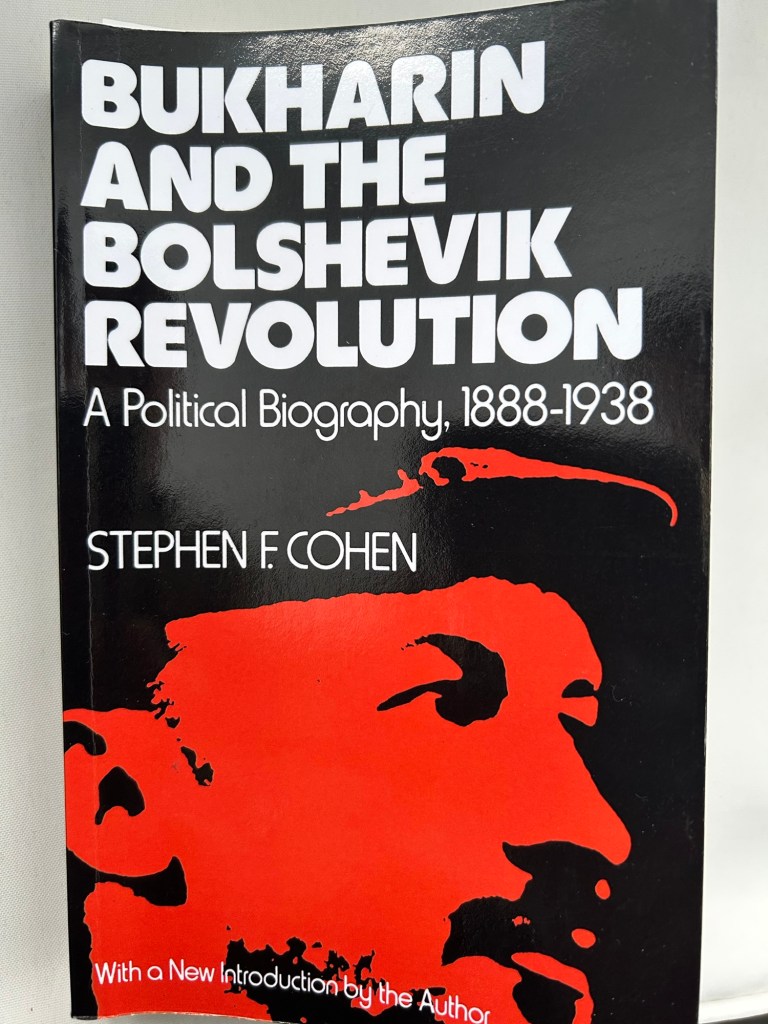
So I bought three books by former Columbia professor Stephen Cohen on Bukharin. The more I read, the more unsettled I became. Every evening, coming home from work, my mind was filled with nothing but the Soviets, the Bolsheviks, Vladimir Ilyich Lenin, Nadezhda Krupskaya, Inessa Armand, and Nikolai Bukharin. A profound sadness enveloped me, day and night, refusing to dissipate.
Why? Why did these books shake me so deeply? I’ve read plenty of biographies over the years and forgotten most of them within days. But Lenin and Bukharin were different. They touched something in my soul.
Reading about the lives of English, American, or European figures never evoked this feeling.
Let’s imagine I die tomorrow—whether from old age, terminal illness, a train derailment with a rail piercing through my chest, or a plane crash leaving me hanging from a tree with my head nowhere to be found—or maybe just because life feels meaningless. Imagine I’m lying on that bed, pondering, racking my brain, asking myself: What was the most vivid, most cherished thing in my life?
I would tell you, it’s not people. It’s not events. It’s two words: Soviet and Bolshevik. Everything else is fleeting.
When I was in fourth grade, during the farming season, I went to a Yi village to help my father cook. There were no books there except for one about the Red Army establishing the Soviet base in Jiangxi. I devoured it like food. At the time, food was nothing more than watery boiled loofah. These days, no one plants loofah anymore, and the book has vanished too.
The Eternal Jura Mountains
Do you remember? Dusk on Mont-Blanc Avenue. The return train was still an hour away. We walked into a bar by the roadside and sat by the window. The waitress came over. I said, “Un verre de vin blanc, s’il vous plaît!” She asked, “Un, deux?” You replied, “Just one.”
I looked at you in the twilight, at your slightly tired expression. I thought, in this world, I only have you. There is no one else.
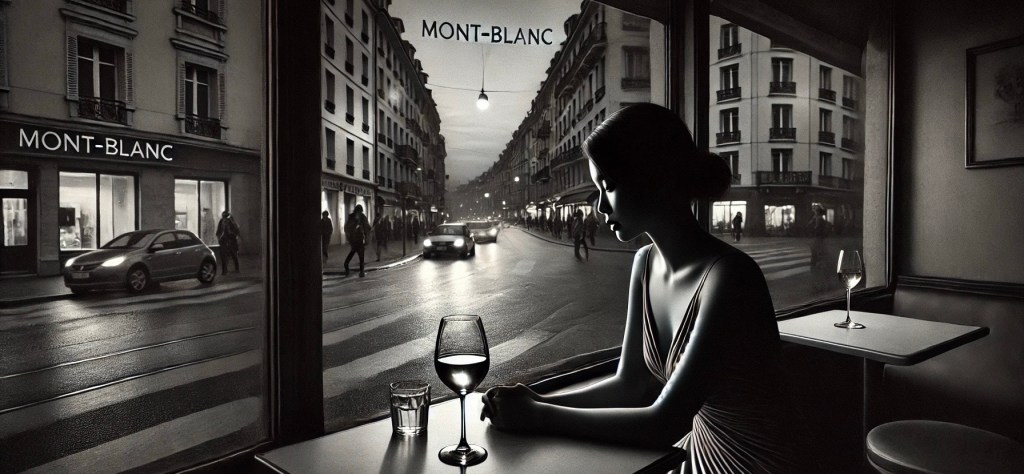
I glanced out the window. In the fading light, countless pedestrians shuffled by. They’re here today, they were here yesterday, and they’ll be here tomorrow and in countless days to come. Where do people come from? Where are they going? Home? Where is home? To catch a train? Where will it take them?
What’s Cornavin station like? I don’t need to see it; I know it with my eyes closed. Platforms like empty air-raid tunnels. Dim yellow lights. Why build a station this way? Likely for no particular reason. You walk up a few steps, go into a gift shop, come out with a bag. Walk a few more steps, go into a convenience store, and come out with another bag. You think to yourself, I’m going somewhere. I’m carrying something.
The waitress returned and asked, “Ça va? Another glass?” I turned to you and asked, “Bébé, are you alright? Do you need anything?” You shook your head.
I knew what the return journey would look like. I didn’t need to see it. I didn’t even need to board the train. Sitting here in this bar, on Mont-Blanc Avenue, by the Rhône, by the shores of Lac Léman, I already knew. It’s all in your heart, in your soul, in your past lives and this one. When Socrates said, “All knowledge is but recollection,” he was speaking of the past. When I say, “All imagination is but recollection,” I am speaking of the future.
I can hear the philosophers protesting: “Imagination looks to the future; memory is bound to the past. How can one recall what has not yet happened? How can one anticipate what has already occurred? What you’re saying is illogical!”
This white wine is excellent. You should take a sip. When did we arrive here? When will we return? Can anyone tell me? Darling, we left for Geneva today, though we arrived yesterday.
I can hear the philosophers protesting again: “Time is linear. The future cannot return to the past!” The logic of reason is so powerful, yet so rigid—a prison with no escape.
Do I not know that yesterday is not today, and today is not tomorrow? Do I not know that what is said is what is meant, and yet not what is meant? This is that, and that is this. Yes is yes, no is no. No is not yes, and yes is not no.
Tell them, my beautiful girl: Today, we went to the city of God, though we arrived yesterday.
Do I not know that a thing is itself and not another thing? I gaze at your innocent eyes, your captivating smile. Do I not know that a thing is not itself, and yet not not itself?
You looked upon the immense, pale Jurassic rocks of the Jura Mountains, the wild forests, the winding Rhône cutting through them. You saw the idyllic villages and small towns, with stone walls and red-tiled roofs. They have been like this for millions of years. They will remain so for millions more.
One day, you will continue forward, while I—I will join the ranks of these Jurassic rocks. Call it eternity, call it heaven, call it death, or call it the immortality of the soul. It doesn’t matter; it’s all the same. If the Jura Mountains don’t care, why should you? Just because you care doesn’t mean the rocks of the Jurassic do. Be brave! When the train enters the Jura, open your arms wide and embrace its eternity!
 Yego’s Chronicles