1
When I received the news of my father’s passing, I was in Myanmar—in Mandalay, to be exact. At the time, I was at the lowest point in my life. I had just gone through a divorce and had been fired from the company where I had worked for many years. Overnight, the robotic routine I had maintained for decades came to an abrupt halt. For the first time, I woke up and realized I didn’t have to go to work. There were no children to drop off or pick up, no colleagues to socialize with. It was a strange feeling—like a prisoner who, after decades in jail, steps out into the world for the first time. The sunlight blinds you, and the world feels vast yet unfamiliar. It’s as if you’ve suddenly woken from a nightmare. I came to a painful realization: the best years of my life were already behind me, and I had no idea how to live from here on out. How did this happen? How did life come to this? Where did it all go wrong?
I decided to travel alone. Not to tour the world, but simply to be on the road—you know what I mean. The moment this idea came to me, I knew I had to follow through. But where would I go? I didn’t want to go to Europe. I’d been there many times—alone, with friends, and with family. But I had never been to Southeast Asia. People my age, I suppose, all feel a certain yearning to trace their roots. I decided to start my journey in Vietnam, then cross through Laos, pass through Myanmar, and finally arrive in Southwest China.
The day after I arrived in Mandalay, my phone rang. It was my little sister.
“Father passed away yesterday,” she said. “I know you’re far away, but I just wanted you to know.”
When I told her I was in Myanmar, she was surprised. I hadn’t told anyone about my trip to Southeast Asia before leaving the U.S.
“The funeral has already been arranged,” she said. “If you can make it back in time, great. If not, you can come home next year for the burial.”
I told her I would try my best.
2
I couldn’t book a flight the next day. I called China Southern and Ruili Airlines, but there were no tickets available. I figured if I rented a car, I could get home in two days at most. But that turned out to be impractical, too.
Then, a Chinese businessman I met at the jade market learned of my situation. He was making a trip to Lashio, and when he heard about my dilemma, he offered to give me a ride. Lashio was halfway between Mandalay and Ruili, from where I could take a taxi or rent a car to Ruili. A direct flight from Ruili to Kunming would get me home in no more than two days. Under the circumstances, it seemed like my best option.
Or so I thought. The first leg of the trip went smoothly. But trouble began when the businessman dropped me off at a rental car agency in Lashio. I couldn’t get a car and eventually had to hire a taxi for the remaining 200 kilometers to the Myanmar-China border.
The border crossing was delayed for hours. When I was finally cleared, I found myself in a taxi heading not to the airport, but to a town I knew nothing about.
3
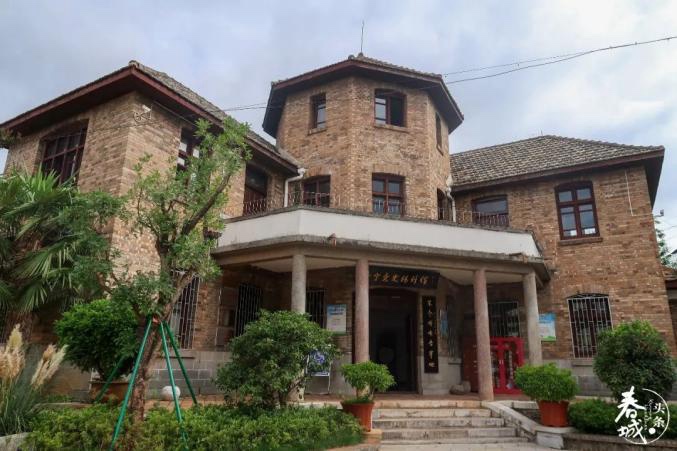
It was almost midnight when the taxi pulled up to the entrance of a house. Exhausted and frustrated, I paid the driver and dragged my feet and luggage toward the steps—but immediately stopped. There was something unusual about the house. It looked foreign, unlike anything in the area. It seemed more like a private residence or a mansion. The spacious porch looked vaguely familiar.
A placard by the foyer entrance read: The Ran Mansion. It was a peculiar name, one I might have found intriguing on any other night—but not this one. I was too tired to think. I stepped inside.
The foyer was brightly lit. The front desk was off to one side, but no one was around. I approached the desk and found the receptionist napping, her head resting on her arms.
“Hello,” I said.
The receptionist stirred and lifted her head. She was a young woman with distinct features I had grown accustomed to over the past few days.
“I’d like a room for one person, please,” I said.
She rubbed her eyes, looked at me, and said, “Your ID, please.”
As she processed my papers, I turned to survey the interior. The hall was circular—an unusual design for this region. The white walls were dotted with doors spaced at regular intervals. A chandelier hung from the high ceiling, and across the hall was a staircase spiraling upwards.
“Second floor, first room on the left,” she said, handing me the key along with a brochure and Wi-Fi passcode.
I thanked her and made my way up the carpeted stairs. As I climbed, I noticed the house had three floors, with each level narrowing as it rose. The third floor was tiny, with only two doors.
When I entered my room, I was surprised to find a fireplace with a mirror above it—an unusual feature in this part of the world. As I moved toward it, I caught a glimpse of a head in the mirror, as though someone had followed me into the room. Startled, I turned around. The door was closed. The room was empty.
“You must be tired,” I muttered to myself.
4
I had trouble sleeping after getting into bed. At one point, I thought I heard noises, but eventually, I fell asleep. In my dream, there was blood everywhere. It covered me, my bed, and the floor, flowing like a river. I woke up suddenly and sat upright. In the dark, I couldn’t see my hands, but it felt as though they were dripping with blood. I touched my neck—it, too, felt wet, as though it was oozing blood.
I jumped out of bed, flung the door open, and ran downstairs.
“Blood! Blood!” I screamed as I ran, dragging a piece of bedding behind me. “I’m bleeding! Help!”
The receptionist at the front desk panicked and called security. Moments later, a short man in his fifties, wearing a shabby uniform, arrived.
“You can talk to him,” the receptionist said to me, relieved to pass the responsibility onto someone else.
5
I woke up the next morning feeling exhausted and unwell. After a shower, which did little to improve my state, I remembered the breakfast brochure. It said breakfast was served starting at 7 a.m., and it was just past seven. I headed downstairs, desperately needing coffee.
The dining room was in a room that appeared to be an extension of the main building. If not for the circular shape of the main hall, one might not even notice the transition. The room had large windows, and as I sipped my coffee, I glanced outside. A portion of the exterior caught my eye: a large, Western-style porch with several tropical flower pots arranged on it. “A house with a Western-style porch,” I thought. “That’s interesting.”
After breakfast, I returned to my room, still struggling to shake off the fatigue. I lay in bed for some time.
When I came downstairs again, it was just past 9 a.m. In the foyer, a small group of tourists had gathered around a tour guide. Curious, I joined them.
“Dear friends from afar,” the tour guide began, holding a little flag above her head, “you are standing in the famous octagonal house. We have just seen the eight-sided walls from the outside, and this is what it looks like inside. Let’s start by counting the doors in this hall. Can anyone guess how many there are?”
Various guesses came from the group: four, five, six.
“Six is correct,” the guide said. “This house is full of fascinating details and secrets. I’ll reveal some of these as we tour the building.”
The receptionist nodded at the guide, who then led us into a nearby room. Again, she asked us to count the doors.
“One!” someone said confidently, pointing to the door we had entered through.
“Ha!” the guide laughed. “That’s incorrect. The correct number is three.”
She walked up to a wall, placed her hand on it, and slid open a concealed door. The group gasped.
“This is a pocket door,” she explained. “It’s hidden within the wall and slides open when needed. There’s another one on the opposite wall.”
It was the first time I’d heard the term “pocket door.” I couldn’t help but feel uneasy, realizing one could stand right next to such a door without even knowing it. As the tour continued, I wondered if there were more hidden doors upstairs.
6
The guide led us up the stairs, stopping right in front of my room on the second floor.
“Here,” she began, “exactly forty years ago, a heroic eighteen-year-old girl named Xue Wen-hui fought off six assailants. At the time, this house served as a branch office of the People’s Bank. This very room was where she was staying, guarding 50,000 in cash from a transaction earlier that day.”
The group grew silent as she recounted the story.
“The assailants smashed through the door and tried to take the cash box. When Xue Wen-hui screamed for help, they put a machete to her mouth and slashed it open to her ear. Still, she refused to let go of the cash box. They cut off both of her hands.”
The room was gripped by the horrifying tale.
“She fainted from blood loss, but her struggle was not in vain. Her cries for help alerted security, and the assailants were caught. Sadly, our heroine survived, but at the cost of both her hands.”
You could sense the tremendous—though unspoken—relief and as well as dismay the group felt. But the tour guide knew exactly what she was doing. As soon as she sensed the expected reaction from her audience, she delivered the final touch of the story, bringing it to its climax:
“Evil will be repaid with evil, and good will be repaid with good. Though our heroine lost her hands, the country did not forget her. She was sent to Soviet Russia, where prostheses were specially measured and made for Miss Xue Wen-hui. Upon her return to China, she was honored as a model worker, met the great Chairman Mao, and dedicated the following decades of her life to serving the people.”
7
Needless to say, I was too late for everything by the time I finally arrived home. I was too late for the funeral, the cremation, and a million other things, all of which my little sister had shouldered alone. But that wasn’t all. No sooner had I gotten home than I fell ill and was bedridden for nearly a week.
One morning, as I lay in bed, suffering from a fit of delirium, I saw my little sister come into my room. She opened the curtains and gently urged me to get out of bed and go downstairs, assuring me, “Everything is going to be OK.” Encouraged by her words, I got up, got dressed, and went downstairs to have breakfast with the rest of my family.
I sat down at the breakfast table, waiting, expecting my sister to come downstairs and join us. I waited, but she didn’t appear.
“Where’s Sister?” I asked. “Where did she go?”
“What are you even talking about?!” my brother exclaimed. “Sister has been dead for ten years!”
“She was just in my room,” I said, confused. “She came in, opened the curtains, and…”
I broke down into uncontrollable sobs.
8
Among the heirlooms we found in our father’s belongings were some old black-and-white photos. One of them caught my eye. It was a photo of a house with an octagonal tower. There was something familiar about it. Then it struck me.
“This looks like the octagonal house where Father used to have an office a long time ago,” I said.
“That’s exactly what it was,” my brother replied dryly.
On my last day in town, I decided to go and have a look at the old house.
The house had undergone renovations and wasn’t exactly as I remembered, though it still bore a resemblance to the photo. Standing in the courtyard, I counted the eight sides of the octagonal tower. The veranda, now painted white, didn’t match the rest of the house and felt like an eyesore.
I walked up the steps but didn’t go inside immediately. The spacious porch brought back memories. Inside, I found the foyer circular, with doors spaced out evenly and a chandelier hanging from the high ceiling. It reminded me of the small hotel I had stayed at a few days ago—the one with the octagonal tower.
“Of course!” I muttered to myself. “That house also had an octagonal tower.”
As I started to climb the circular stairs, a middle-aged woman emerged from one of the doors.
“Can I help you?” she asked suspiciously.
“I was just looking around,” I said. “My father used to work here.”
Her expression softened. “Oh, really? Who was he?”
“He used to be the head of the county,” I said, feeling slightly embarrassed.
“Ah, I see!” she exclaimed. “I’m the museum curator. Please, come in!”
She brought me tea, and we chatted about my father and my childhood memories of visiting his office here. I learned that the house had been built in the early 1940s by a wealthy family with the name Ran. About 20 years ago, it was designated a protected site due to its unique architectural style and now served as a museum.
As she gave me a tour, she said, “This house has a lot of secrets—hidden doors, crawl spaces, and even stories of hauntings. But I don’t believe in such things myself.”
We climbed the circular stairs as she spoke. Out of pure chance, I glanced at her hands on the railing. To my astonishment, both were prosthetic. My heart stopped, and I nearly fell off the stairs.
After finishing my visit, I walked outside, my heart still unsettled. Standing in the courtyard, I took another careful look at the octagonal tower. I couldn’t quite put it into words—was the octagonal tower from my memory, the one in my father’s photograph, the one from that night in Ruili, and the one now towering before me four different towers, or were they all the same building? Which one was the real octagonal tower?
 Yego’s Chronicles