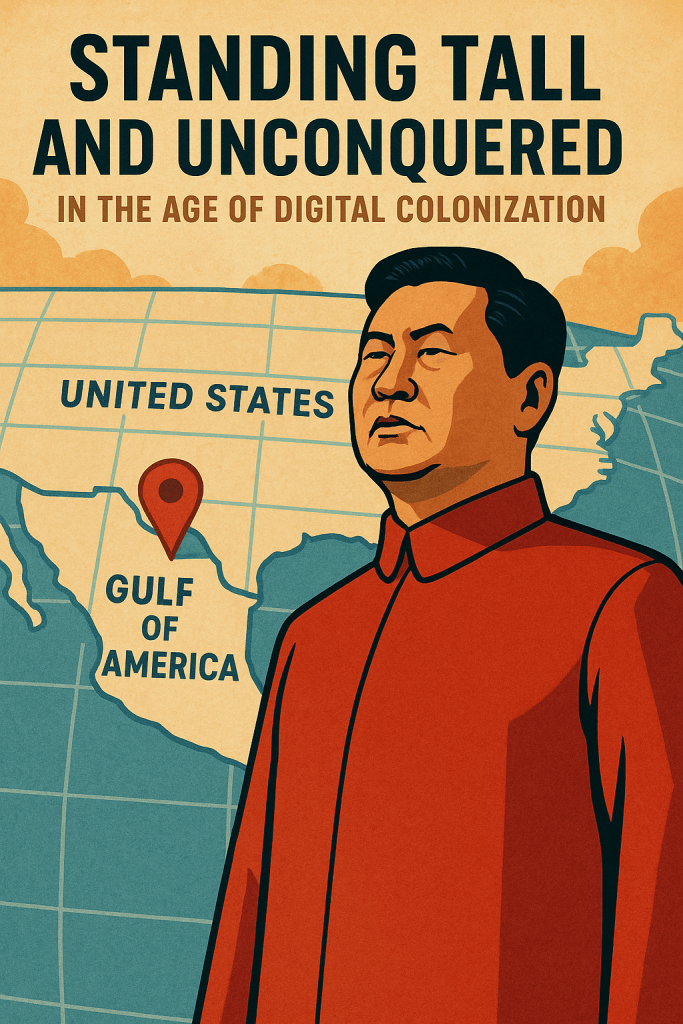
Standing Tall and Unconquered in the Age of Digital Colonization
1. Gulf of Mexico or Gulf of America?
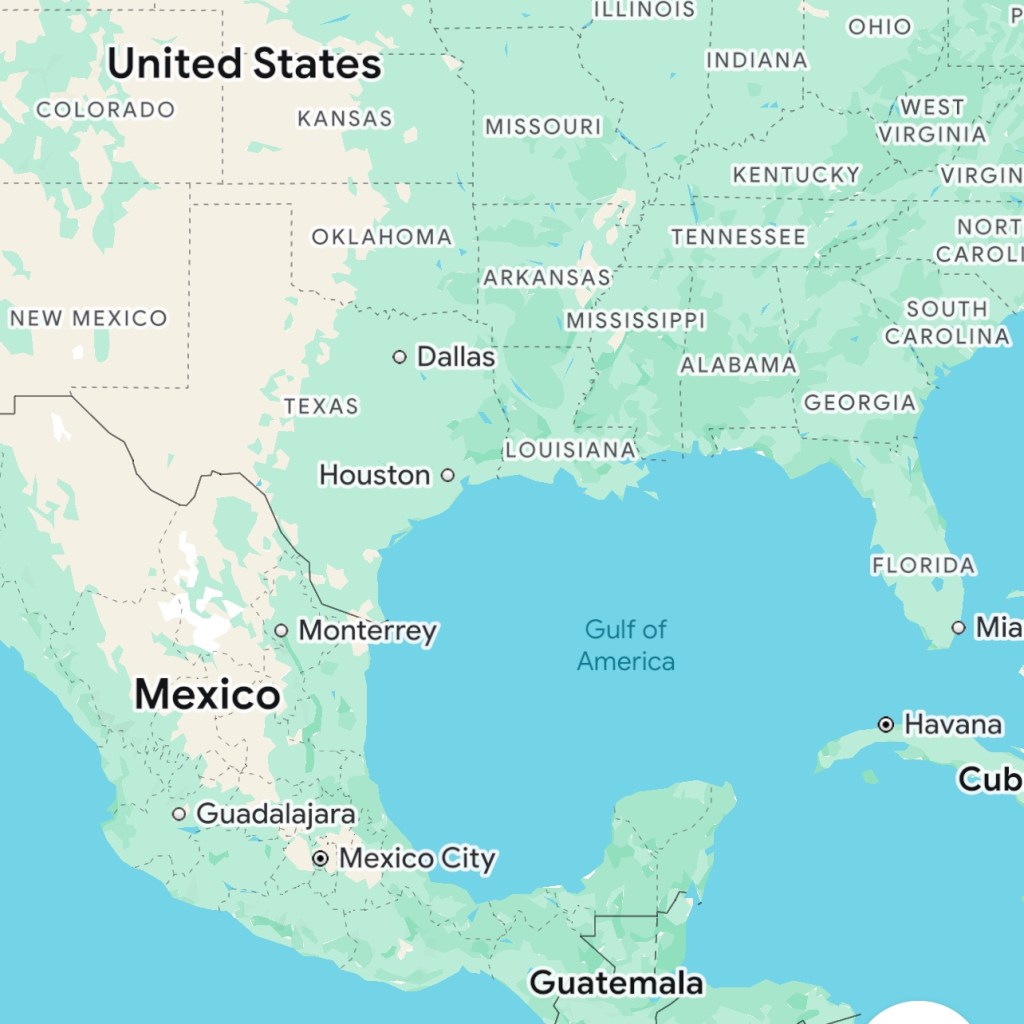
Imagine opening Google Maps or Apple’s iMaps, zooming into the waters between the United States and Mexico, and finding the Gulf of Mexico renamed the “Gulf of America.”
This is not a hypothetical scenario but a chilling reality, where digital platforms wield the power to rewrite geography, erase cultural histories, and assert dominance without firing a shot. This audacious act is a stark example of digital colonization—a 21st-century imperialism that subjugates nations not through physical conquest but through control over the digital tools that shape our lives.
If 20th-century colonization meant planting flags and redrawing borders, today it means dominating the platforms that govern communication, commerce, and knowledge, rendering national sovereignty a hollow promise. Yet, amidst this global capitulation, one nation stands defiant: China. By building its own digital ecosystem, China has preserved its sovereignty, offering a bold model of resistance in the age of digital colonization.
2. Digital Colonization
Digital colonization is the outsourcing of a nation’s lifeblood to foreign powers. Consider the pillars of modern existence: social media platforms like YouTube, Facebook, and X connect billions but are controlled by American corporations. E-commerce giants like Amazon and Walmart dictate global trade, while payment systems like Apple Pay and PayPal process transactions worldwide. Search engines like Google shape what people know, and large language models like ChatGPT or Grok define the future of artificial intelligence. When a country’s citizens rely on these foreign systems for their daily physical and mental sustenance, their data, preferences, and behaviors are harvested and monetized abroad, often without local control. This is digital colonization: sovereignty eroded not by armies but by servers and code. The renaming of the Gulf of Mexico on global mapping platforms exemplifies this power—foreign tech giants can alter a nation’s cultural and historical identity with a few keystrokes, and most countries are powerless to resist.
3. India: A Case Study in Digital Colonization
Nowhere is digital colonization more evident than in India, a nation of 1.4 billion people whose digital landscape is dominated by American brands. In social media, platforms like WhatsApp, Facebook, and YouTube reign supreme. WhatsApp, owned by Meta, is the go-to messaging app for over 500 million Indians, while YouTube dominates video content with nearly 450 million monthly users. X and Instagram, also American, are among the top social networks, leaving Indian alternatives like ShareChat struggling for relevance. In e-commerce, Amazon and Walmart-owned Flipkart control over 60% of the market, dwarfing local players like Snapdeal or Paytm Mall. Payment systems tell a similar story: while India’s homegrown UPI (Unified Payments Interface) is widely used, American services like Google Pay and PhonePe (partially owned by Walmart) process a significant share of digital transactions, with Google Pay alone handling billions of dollars monthly. For search engines, Google holds a near-monopoly, with over 98% of India’s search market, leaving no room for indigenous alternatives like Justdial or non-existent local competitors. Even in emerging AI technologies, Indian startups rely on American models like ChatGPT for integration, as no domestic large language model has scaled to compete. India’s digital dependence on American platforms illustrates a colonized state: its citizens’ communication, commerce, and knowledge are shaped by Silicon Valley, with data flowing to foreign servers and profits accruing abroad. This reliance undermines India’s sovereignty, as external actors control the digital arteries of its society.
4. The Global Cost of Digital Dependence
India’s plight is not unique but emblematic of a global trend. Nations from Brazil to Germany rely on American or Western tech ecosystems, leaving them vulnerable to external influence, surveillance, and economic manipulation. A single algorithm tweak by Google or a policy shift by Meta can disrupt economies or silence voices. Historical colonialism extracted resources like gold and spices; digital colonialism extracts data, the currency of the 21st century. The renaming of the Gulf of Mexico on digital maps is a microcosm of this power—foreign tech giants can reshape narratives, and most nations lack the tools to push back. Their citizens scroll X, shop on Amazon, pay with PayPal, and query ChatGPT, ceding control to Silicon Valley. Sovereignty, once defended with armies, is now undermined by code.
5. China: The Unconquered Exception
Yet one nation defies this trend: China. Alone among major powers, China has built a self-sufficient digital ecosystem, ensuring its citizens rely on homegrown platforms. Instead of YouTube or X, Chinese citizens use WeChat and Douyin, platforms developed and regulated domestically. Instead of Amazon or Walmart, they shop on Alibaba and JD.com, which prioritize local markets and comply with national laws. For payments, WeChat Pay and Alipay dominate, keeping financial data within China’s borders. Baidu serves as the primary search engine, and AI models from Baidu and Tencent rival Western counterparts. This is not mere substitution but a deliberate strategy to maintain digital sovereignty. China’s Great Firewall, often criticized as censorship, doubles as a shield, protecting its digital borders from foreign domination. When Western tech giants like Google or Facebook sought to operate in China, they faced strict conditions, forcing them to comply or exit. Most left, unable to compete with local alternatives tailored to China’s needs.
China’s approach is a masterclass in resisting digital colonization. While India and others debate privacy laws or beg for regulatory scraps, China has acted decisively, creating a parallel digital universe. This independence comes with trade-offs—debates over freedom persist—but it ensures that China is not a digital colony of Silicon Valley. Its citizens’ data, economic activity, and cultural narratives remain under national jurisdiction, free from the whims of foreign algorithms or the audacity of a renamed gulf.
6. A Call to Resist
The age of digital colonization demands a reckoning. Nations must ask: who controls our data, our commerce, our maps, our knowledge? For most, the answer points to foreign tech giants, as India’s case starkly illustrates. The renaming of the Gulf of Mexico on global platforms is a warning—a reminder that digital colonization can rewrite history itself. China’s example, though imperfect, is singular. By building its own platforms, China has declared that it will not be colonized—not by armies, not by code. Other nations must take note. Sovereignty in the digital age is not a given; it is a choice. China has chosen to stand tall, unconquered, and free.
 Yego’s Chronicles