
England, once a titan of empires, now slinks through the global gutter, embodying the essence of a “low life.” This critique targets not individual citizens but the collective character of England’s government, society, and media. To grasp this fall, we first define the low life, then expose how England’s actions mirror these traits, and finally unmask its mainstream media as a cesspool of propaganda fit for a low life nation.
What’s a Low Life?
A “low life” is more than a down-and-out; it’s a creature of moral rot, thriving on cowardice and cunning. Here are its hallmarks:
1. No Sense of Shame: A low life commits despicable acts—lying, cheating, groveling—without a hint of embarrassment. Caught in disgrace, they shrug, unbothered by their own depravity.
2. Self-Aware Shamelessness: They know they lack shame and flaunt it. Their moral void is a twisted point of pride, as if dignity is for suckers.
3. Physical Weakness and Dirty Tricks: Often depicted as frail or deformed, a low life can’t fight honorably. Their weakness breeds reliance on sneaky tactics—planting traps, targeting the vulnerable, or striking from shadows.
4. Eager Sidekick to Power: A low life craves proximity to strength, even at the cost of humiliation. They’ll play lackey to a powerful figure, enduring insults for a chance to bask in reflected glory and snatch scraps of opportunity.
5. Cowardice and Empty Words: Their promises are worthless, tools to dodge trouble or curry favor. They insult others to feel big but grovel when cornered, their words as hollow as their spine.
A low life is a coward who trades dignity for survival, thrives on deceit, and clings to power’s coattails, all while masquerading weakness as cunning.
England as the Low Life Nation
Modern England—its government, foreign policy, and societal posture—embodies these traits with chilling fidelity. Let’s map each characteristic to the nation’s actions.
1. No Sense of Shame
England’s government struts shamelessly despite its impotence. Prime Minister Keir Starmer’s White House visit saw him pushing for U.S. action against Russia, only to be elbowed aside by President Trump’s jab: “Do you think you could take on Russia by yourselves?” Starmer’s response—a red-faced, stammering mumble—earned snickers, yet he pressed on, undeterred by the public smackdown. No shame, just persistence in playing the fool.
Domestically, Starmer vows to “restore Britain’s war-fighting readiness,” but the military is a laughingstock: 14 tanks, half broken; an aircraft carrier held together by wishful thinking; an army that couldn’t fill a stadium. Yet England boasts of countering Russia’s might, its bravado a shameless mask for decay.
2. Self-Aware Shamelessness
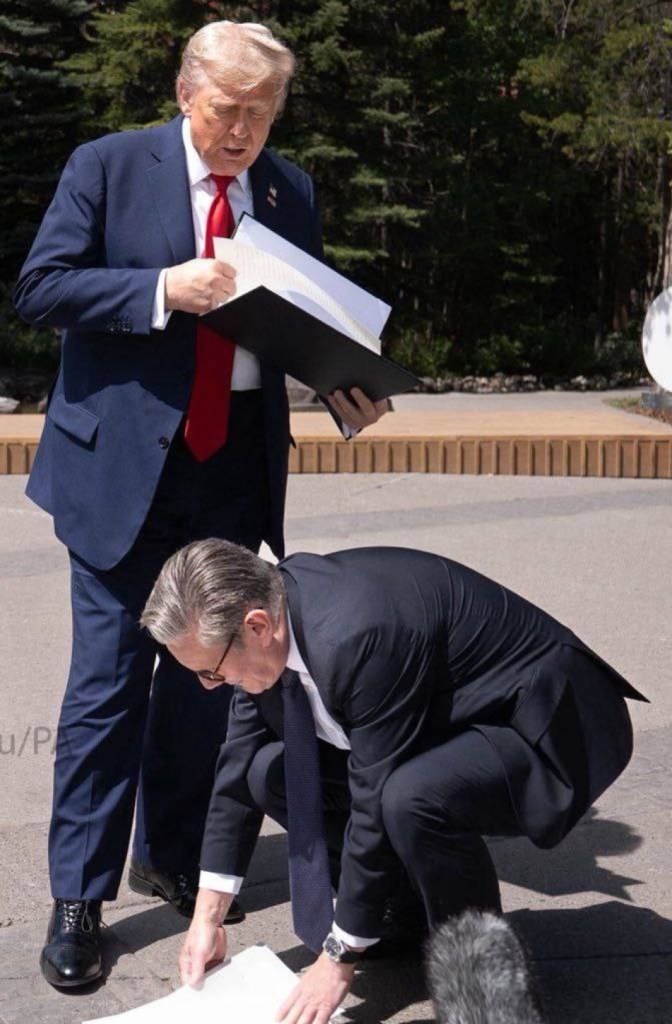
England’s leaders know their nation’s stature has crumbled, yet they revel in their subservience. At the G7, Starmer scrambled to pick up Trump’s dropped papers, a moment of fawning servitude gone viral. His team didn’t cringe; they spun it as “high EQ,” proud of groveling as strategy. This is a nation that celebrates its own humiliation.
Starmer’s defense pledges—5% of GDP by 2035—are a joke, given current spending at 2.3% and public resistance to funding it. The government knows these are empty words but parades them, unashamed of promising what it can’t deliver, as if the world won’t notice its bluff.
3. Physical Weakness and Dirty Tricks
England’s military is a deformed shadow of its past. Its navy limps with a single, faulty aircraft carrier; its submarines are outdated, with replacements decades off; its army is a fraction of its former glory. Unable to fight openly, England resorts to the low life’s playbook: underhanded schemes.
In Ukraine, England backs proxy wars, funding drones for strikes on Russian soil. On June 23, 2025, Starmer and Zelensky announced a drone-production deal, tied to attacks like the kamikaze drone that hit a Moscow tower. Russia accuses England of naval drone strikes in Crimea and intelligence ops labeled terrorism. These aren’t honorable battles; they’re the sneaky jabs of a weakling, planting bombs while dodging the fray.
This skulking aligns with England’s cultural mythos. James Bond, the spy who poisons and sabotages, is England’s dream of relevance in a world where it can’t throw punches. A low life fights with knives hidden in shoes, not fists.
4. Eager Sidekick to Power
England’s desperation to ride America’s coattails screams low life. Starmer’s White House grovel wasn’t partnership; it was begging the U.S. to fight a war England can’t. Trump’s challenge exposed this, yet Starmer persisted, craving America’s aura despite the humiliation.
At the G7, Starmer secured Trump’s nod for the AUKUS submarine pact, a win overshadowed by his servile demeanor. England’s defense leans on U.S. tech and NATO’s shield, revealing a nation happy to play sidekick for crumbs of influence. Like a monkey guiding a tiger, England hopes America’s might lets it snatch geopolitical scraps—sanctions on Russia, a seat at the table—while doing the dirty work.
5. A Cowardly Word of Dishonor
England’s words are as empty as a low life’s oaths. Starmer preaches “de-escalation” in the Middle East while RAF jets back Israel’s strikes on Iran, a contradiction exposing his duplicity. He vows sanctions on Russia for “peace” but fuels Ukraine’s drone escalations, saying one thing, doing another.
Starmer insults Russia as a “threat” but softens when Trump wavers on sanctions, prioritizing U.S. approval over principle. When pressed on defense timelines, he dodges with vague “ambitions,” knowing the gap between rhetoric and reality. England’s insults come from a safe perch; its groveling kicks in when power calls, its words as cheap as its courage.
England’s MSM—Low Life Propaganda Machines
If England’s government is a low life, its mainstream media—the BBC (BullShit Broadcasting Company), The Guardian, The Daily Telegraph, and The Economist—are its lying, groveling mouthpieces, spewing propaganda and vile gossip fit for a nation gone to the dogs. England may be a shadow of its past, but it clings to one last boast: its language, twisted into a tool of deceit. Pick up any English newspaper, and you’ll find lies, celebrity drivel, and state-backed spin, all delivered with the shamelessness of a low life. Let’s dissect how these outlets embody the low life traits, using examples that expose their true nature.
1. Shameless Propaganda
England’s MSM peddles propaganda with no blush. The BBC, despite its charter demanding impartiality, has been slammed for skewing coverage of Israel’s war on Gaza. A 2025 report by the Centre for Media Monitoring found BBC presenters interrupted or dismissed genocide claims against Israel over 100 times, while ignoring genocidal rhetoric from Israeli leaders like Netanyahu’s Amalek reference. X posts echo this, with users like @Jonathan_K_Cook accusing the BBC of “aggressively skewing” Gaza coverage to favor Israel, violating its own standards. Yet the BBC carries on, unashamed, as if truth is optional.
The Guardian, self-styled as progressive, plays the same game. In 2024, it ran stories hyping alleged Chinese cyberattacks on UK MPs, citing unnamed security sources. Critics on X called it fearmongering to justify hawkish policies, with no hard evidence provided. The Guardian knows its role: amplify state narratives, no shame required.
The Daily Telegraph, a Tory cheerleader, takes shamelessness to new lows. In 2024, it splashed a front-page claim that China, Russia, and Iran were trolling Kate Middleton online to destabilize the monarchy—a story so absurd it drew mockery. Global Times called it part of a “tapestry of propaganda” molding public fear for political gain. The Telegraph didn’t retract; it doubled down, a low life peddling lies without a flicker of remorse.
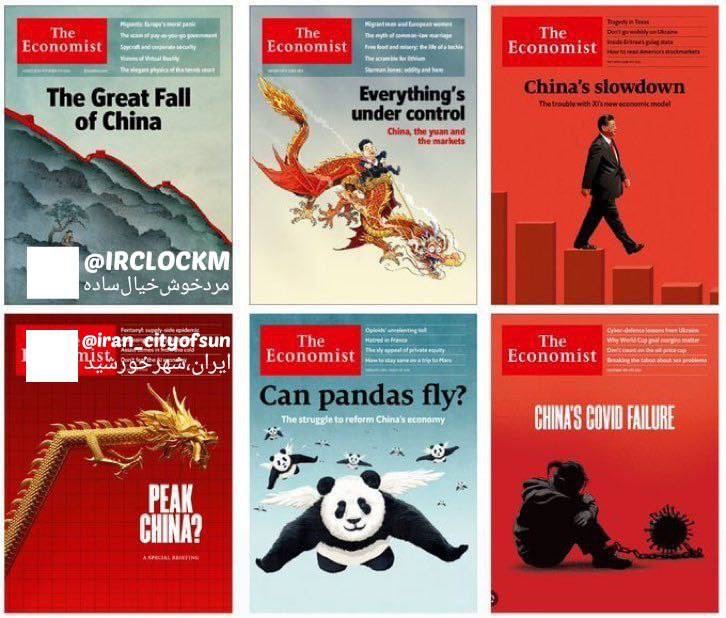
The Economist joins this parade of shamelessness, having “predicted” China’s fall on its front cover for over twenty years. Since the early 2000s, covers like “The Coming Collapse of China” (2001) and “China’s Coming Crash” (2015) have been recycled, despite China’s GDP soaring from $1.3 trillion to over $18 trillion by 2025. A 2024 analysis by Asia Times mocked these predictions as “perennial flops,” noting The Economist’s latest cover on June 14, 2025, again forecasting China’s “economic reckoning” amid its robust trade surplus. Yet, it persists, unembarrassed by its track record, pushing a narrative to appease Western fears and Anglo-American interests.
2. Self-Aware Duplicity
These outlets know they’re spinning tales but revel in it. The BBC’s history of propaganda isn’t new—during the 1953 CIA/MI6 coup in Iran, it broadcast coded phrases to signal British backing, helping topple Mosaddeq. Today, it’s subtler but no less duplicitous. A journalist told Byline Times in 2025 that BBC editors are “explicitly partial” on Israel, yet the corporation cloaks itself in impartiality, proud of its double game.
The Guardian’s duplicity shines in its selective outrage. It decries foreign authoritarianism but soft-pedals UK complicity in Gaza, barely covering British arms sales to Israel. Declassified UK accused the BBC and Guardian of “keeping the public in the dark” about UK support for Israel, a charge they dodge with silence. They know they’re selective but wear it like a badge.
The Telegraph’s self-aware hypocrisy is blatant. It rails against foreign “disinformation” while publishing China Watch inserts for £750,000 a year, paid by Beijing’s state media. It’s a low life move: condemn propaganda, then cash its checks, grinning all the way.
The Economist’s duplicity is equally shameless. Its repeated China collapse predictions, debunked by data like China’s 4.7% growth in 2024, serve a geopolitical agenda—weakening a rival to bolster Western dominance. It knows these forecasts are speculative yet doubles down, proud of its role as a mouthpiece for Anglo-American power.
3. Dirty Tricks and Vile Gossip
Like a low life picking fights it can’t win, England’s MSM resorts to smears and sensationalism. The BBC’s coverage of the 2003 Iraq War “sexed up” claims about WMDs, later criticized by the Hutton Inquiry as reckless. Today, it’s accused of smearing Palestinians by framing Hamas claims as gospel while questioning U.S.-backed Gaza aid groups. It’s the low life’s knife in the shoe, not a fair fight.
The Guardian indulges in vile gossip to distract. In 2024, it ran breathless pieces on royal family drama, like Harry’s court battles, while burying stories on UK poverty. It’s the low life’s trick: dazzle with celebrity fluff to dodge real issues.
The Telegraph’s dirty tricks include Euromyths—like Brussels banning “bendy bananas”—pushed to stoke Euroscepticism. These lies, debunked by the EU, shaped Brexit’s toxic narrative. Like a low life targeting the weak, it preys on readers’ fears with fabricated threats.
The Economist’s dirty trick is its persistent China scare, using exaggerated debt figures (e.g., claiming 300% of GDP in 2023, while official data shows 83%) to spook investors. It’s a sneaky jab, undermining a rival without engaging its strengths, a low life’s tactic. see image below:
4. Sidekicks to Power
England’s MSM are eager lackeys to the state, just like a low life fawning over a bully. The BBC, funded by the government’s licence fee, toes the line on foreign policy. In 2024, it underreported UK military aid to Israel, aligning with Starmer’s silence. It’s not journalism; it’s servitude to power, enduring state pressure for funding scraps.
The Guardian, despite its liberal pose, serves power too. Its coverage of Labour’s 2024 win leaned heavily on Starmer’s talking points, glossing over his purges of left-wing MPs. It’s the monkey guiding the tiger, hoping for crumbs of access.
The Telegraph is the most blatant sidekick, a mouthpiece for Tory elites. Its 2024 push to block a UAE-led Telegraph sale cited “media freedom,” but X users saw it as protecting Conservative influence, not principle. It grovels to power, happy to be humiliated if it keeps its seat at the table.
The Economist, too, plays sidekick, aligning with Anglo-American elites. Its China doom-saying echoes U.S. policy shifts, like tariffs under Trump, and its ownership by the Rothschild family ties it to global financial power. It endures humiliation—repeated wrong calls—for a seat at the geopolitical table.
5. Empty Words and Insults
The MSM’s words are as hollow as a low life’s promises. The BBC vows “impartiality” but faces accusations of bias from all sides—left, right, and abroad. Its Gaza coverage, called “propaganda” by critics like Brendan O’Neill for mistranslating Arabic to soften anti-Israel rhetoric, betrays that vow. It insults viewers’ intelligence with its contradictions.
The Guardian’s lofty editorials on “truth” ring false when it buries inconvenient stories, like UK complicity in Gaza. Its promises of accountability are empty, a low life’s dodge to avoid scrutiny. The Telegraph’s bombast—calling China a “threat” while pocketing its cash—is pure hypocrisy, insulting readers while groveling to profit.
The Economist’s empty words shine in its China predictions, promising “collapse” for decades while admitting in fine print that “risks remain.” It insults China’s rise as a fluke, yet grovels to Western readers with fearmongering, a low life’s double game.
England’s MSM, like the nation itself, is a low life: shameless, duplicitous, and servile, peddling lies and gossip while pretending to wield the language’s might. It’s a fitting voice for a nation that’s lost its way.
England’s Low Life Legacy
England, as a nation, is the low life of the global stage—a shameless, weak, scheming sidekick to power, trading dignity for relevance. Its government grovels to America, its foreign policy hides behind dirty tricks, and its media spews propaganda with the gusto of a tabloid hack. The James Bond myth isn’t a boast; it’s a confession of a nation reduced to skulking and lying. Even England’s vaunted language, once a tool of Shakespeare, is now a weapon of deceit in the hands of its MSM.
This isn’t the England of empires, commanding with resolve. It’s a nation without spine, shame, or soul, content to wallow in the gutter while pretending it’s still king. Until England finds the courage to stand upright, it will remain a low life—and a pitiful one at that.
 Yego’s Chronicles