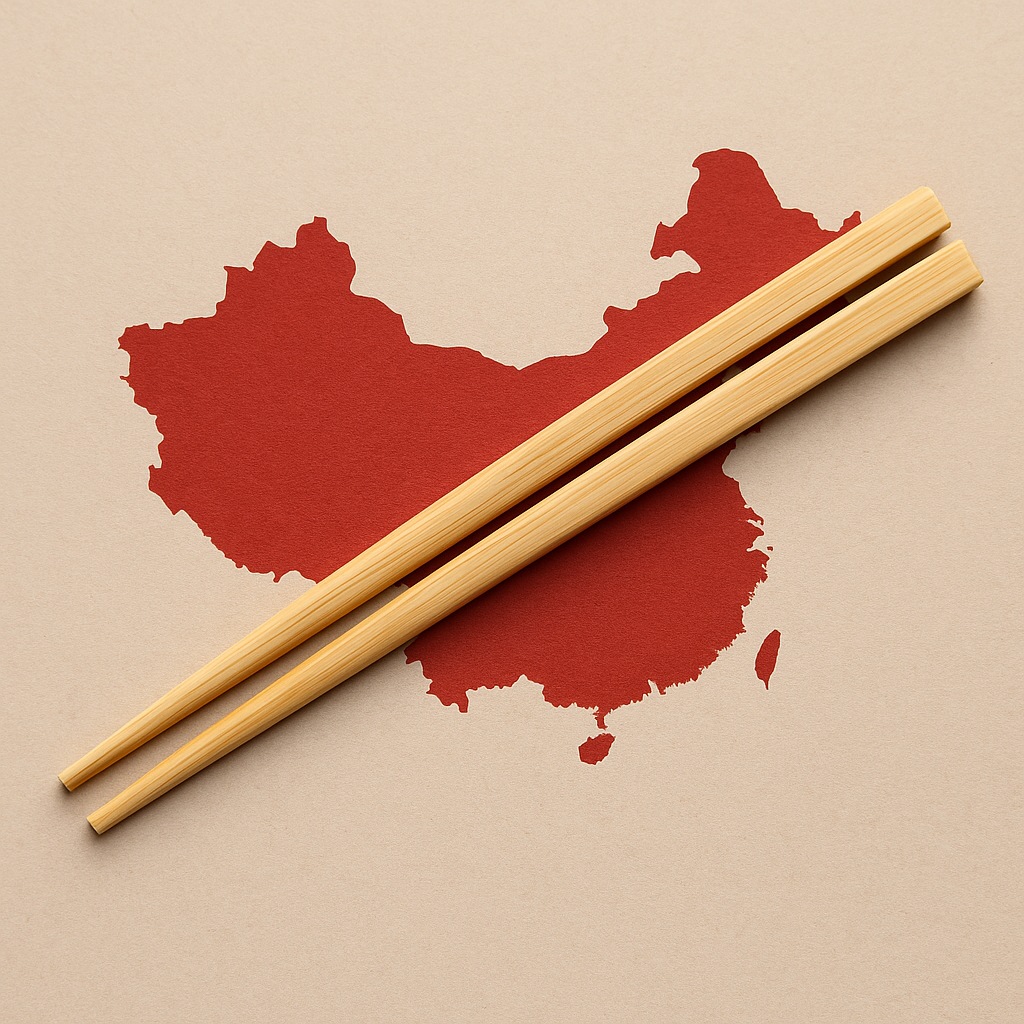
1. The Norwegian Professor and the Mushroom Dish
One time, a Norwegian professor came to our university to give a talk. Afterward, we took him to lunch. Everyone at the table was handed a copy of the menu and courteously asked to pick a dish of their own liking. Our foreign guest, a big fan of canned mushrooms he had tasted elsewhere, naturally ordered that.
When the dozen-odd dishes finally arrived, we all began to eat in the way every Chinese person knows by heart—everyone freely helping themselves to all the dishes on the table, including, of course, the professor’s favorite mushrooms. The Norwegian professor was clearly displeased.
At a Chinese table, every dish is yours, and no dish is yours.
It is a communal way of eating, and this small cultural habit contains a truth much larger than food.
2. The Puzzle of China’s Economic System
When it comes to China’s basic social-economic institutions, outsiders often feel the same confusion as the Norwegian professor. They ask: Is China socialist or capitalist?
Looked at one way, it appears to be a typical capitalist society—private ownership of land-use rights and material wealth, corporations, a stock market, millionaires and billionaires, all the familiar hallmarks of capitalism. But viewed another way, it is unmistakably socialist—collective and state ownership of key resources, a powerful central bank, and a planning apparatus that can, when needed, steer entire sectors of the economy.
So what is China? A capitalist society wearing socialist clothes? Or a socialist society experimenting with capitalist tools?
The answer lies in two old sayings, which, taken together, tell us more about China than any modern textbook on political economy.
3. “千年田,八百主” — The China of Private Ownership
The old Chinese saying goes: “千年田,八百主”—An unchanging field of a thousand years passes through eight hundred hands.
This is not just a poetic exaggeration; it reflects a hard social and economic truth. Even in imperial times, when emperors were thought to hold Heaven’s mandate, private ownership was a fact of life. Land changed hands countless times through sale, inheritance, or confiscation for legal causes, but it rarely disappeared from the private sphere altogether.
A simple fact about China is that emperors, for all their power, could not seize private land or property without legitimate cause. Dynasties rose and fell, but the land continued to pass from one private hand to another. The first half of our dining-table metaphor comes from this: “Each dish is yours to taste.”
Private ownership, in some form, has been a deep-rooted constant in Chinese society, shaping how families accumulated and transmitted wealth.
4. “普天之下,莫非王土” — The China of Ultimate Sovereignty
But there is another old saying, equally true: “普天之下,莫非王土,率土之滨,莫非王臣.”
All under Heaven belongs to the king; to the edge of the land, all are his subjects.
This phrase first appeared in the Book of Songs (《诗经》), long before the Qin unification. It expressed the fundamental principle of Chinese political life: whatever private hands may hold, ultimate sovereignty lies with the state.
And this remains true today. “王” is no longer a king but a republic. Land-use rights may be bought and sold, but the land itself, ultimately, is still state-owned. A business can be privately run, but it lives and dies under the regulatory authority of the state. This is the other half of the dining-table truth: “No dish is yours.”
5. So, Socialist or Capitalist?
So, is China a socialist society or a capitalist one?
Both, and neither.
China has always been a place where “千年田,八百主”—private ownership and market transactions flourish. But it is also a place where “普天之下,莫非王土”—ultimate authority over all resources rests with the state.
This duality confuses both China’s admirers and its critics. It makes fools of those who dream of privatizing China and turning it into “a land like the US,” and it unsettles those who see China as purely socialist because it does not fit their textbook models either.
But perhaps we should stop trying to force China into someone else’s categories.
Next time you sit at a dining table in China, put away your ideology. Enjoy the dishes. Bon appétit!
 Yego’s Chronicles