2025 feels like one of those rare hinge years—the kind that only become obvious in hindsight, but which you can feel while you’re living through them. Eighty years after the end of World War II, the world order born from that moment is quietly, then loudly, falling apart. And watching that collapse has brought me a tremendous sense of euphoria, of liberation, of having a long-mocked interpretation of the world finally vindicated by events.
1. The year the post-WWII world order finally cracked
The order assembled after 1945—underwritten by the United States and enforced through military alliances, financial institutions, and moral rhetoric—was sold as peace, stability, and progress. For much of the world, especially the so-called Global South (or more honestly, the global majority), it delivered something else: proxy wars, debt traps, sanctions, coups, structural poverty, and permanent humiliation disguised as “development.”
2025 feels like the year that illusion finally stopped working.
Not collapsed overnight. Not ceremonially ended. But decisively broken. The rules stopped being obeyed because they no longer commanded belief. When belief dies, power follows.
And that—history shaking off an unjust equilibrium—is already reason enough for happiness.
2. Ukraine: the war that broke the spell
This year marks the unmistakable turning point of the war in Ukraine. Whatever one’s sympathies, one thing is now undeniable: Ukraine has been destroyed, physically and demographically, and its destruction has not preserved the old order—it has exposed its hollowness.
The war was supposed to do several things at once:
Reassert Western military dominance,
Revitalize NATO,
Discipline Russia,
Warn China
Instead, it did the opposite.
Ukraine became the sacrificial altar on which the European dream of eternal relevance was laid to rest. The promise that NATO expansion would bring security ended in ruin. The idea that Europe could fight a major war without destroying itself economically proved to be fantasy.
For decades, the West insisted history had ended. In Ukraine, history came back—with artillery.

As the saying goes, “In a ham-and-egg breakfast, the chicken is involved… but the pig is committed.” Poor pig gave everything. Chicken just showed up, laid an egg, and moved on. 🐷🍳
3. Europe’s long moral and material bankruptcy
By 2025, something has become impossible to hide: Europe—the core NATO countries especially—is bankrupt on nearly every level that matters.
Economically deindustrialized, energy-dependent, financially hollowed out. Morally preaching values no one believes anymore—least of all Europeans themselves. Politically ruled by a clown class presiding over managed decline, from women’s doctors to trampoline jumpers, all the way to a brainless, post-menopausal giggler bearing the name of a great Greek opera singer she cannot sing and does not deserve. Strategically incapable of acting without Washington’s nod. It missed the green-energy turn, missed AI, missed the entire wave of cutting-edge information technologies.
The self-image of Europe as the moral conscience of humanity has collapsed under the weight of selective outrage and selective memory. Its industries are fading. Its demographics are aging. Its future is managed, not imagined.
It is not absurd anymore to predict the following:
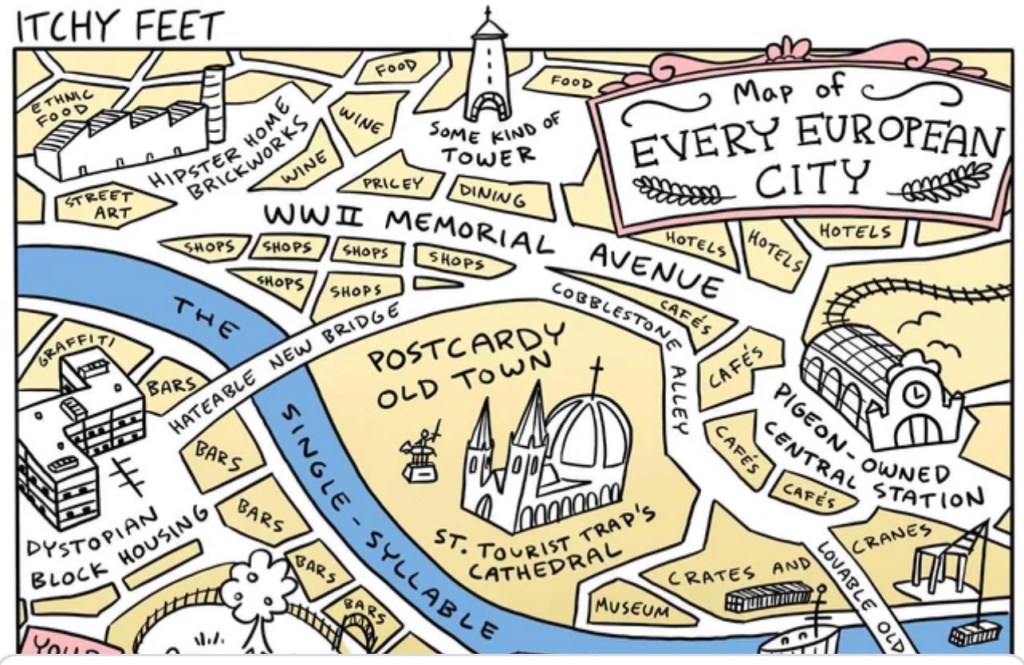
In 2026, or a year after, a) NATO becomes a relic, a museum exhibit—Cold War uniforms behind glass, b) the EU slipping backward half a millennium in geopolitical relevance; c) Europe reinventing itself as a scenic theme park: tourism, prostitution, souvenir Christianity, and decaying cathedrals.
A beautiful place to visit. No longer a place where the future is made.
And strange as it sounds: watching pretension dissolve is liberating.
4. The American retreat—call it what you like

The United States, too, has reached its imperial limit. Its own national security assessments now read less like blueprints for dominance than manuals for retreat.

Whether one calls it a retreat or being beaten back hardly matters. By 2025, the direction is clear: the U.S. is shrinking its strategic horizon, retreating toward the Western Hemisphere, where it resumes a more familiar role—bully, enforcer, and meddler in Central America.
This is not a moral judgment; it’s an imperial lifecycle.
Empires don’t disappear. They contract. They consolidate. They grow louder and more erratic near home as they lose leverage abroad. The Monroe Doctrine is making a comeback—not as doctrine, but as reflex.
For the rest of the world, this narrowing of American reach is not tragedy. It is oxygen.
5. China and Russia—and the romance of a new era
Into this vacuum step China and Russia, not as imitators of Western empire, but as something older, colder, and arguably more honest: civilizational powers.
By 2025, their ascent is no longer hypothetical. They are no longer “challengers.” They are peers—superpowers shaping reality rather than reacting to it.
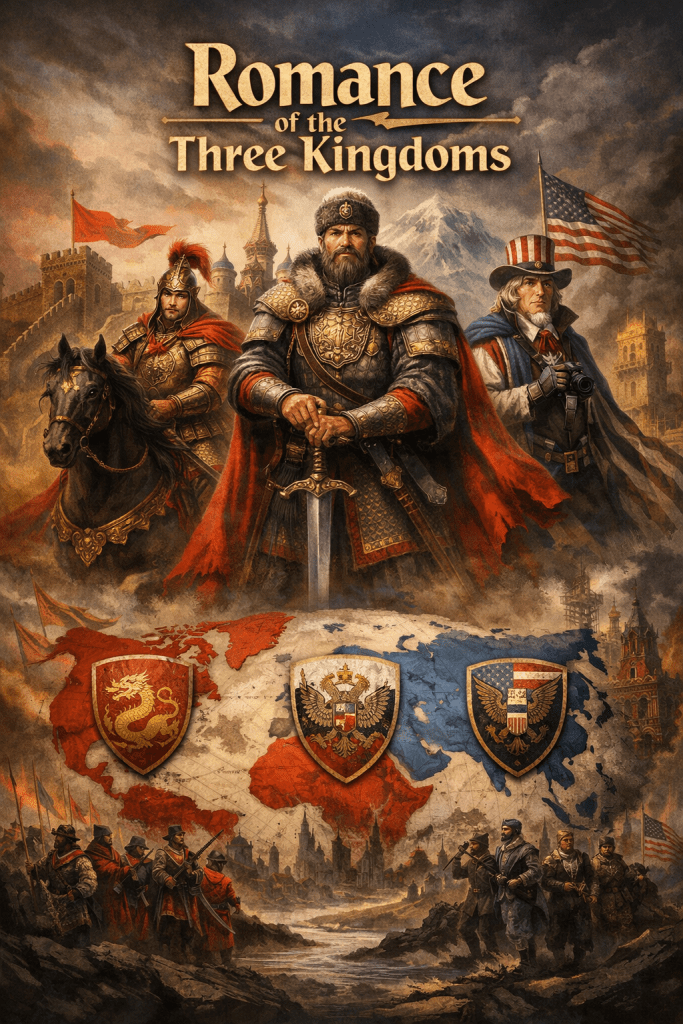
What emerges feels less like a neat new order and more like a return to classical multipolarity—a new Romance of the Three Kingdoms:
shifting alliances strategic patience balance rather than domination power acknowledged instead of moralized
It is messy. It is dangerous. But it is also real.
And for the first time in my lifetime, history feels open again—no longer frozen under one narrative, one morality, one acceptable future.
6. Why this makes me happy
I’m not happy because suffering has ended—it hasn’t.
I’m happy because lies are ending.
Because the world is no longer required to pretend.
Because power is being redistributed.
Because the global majority is no longer invisible.
Because history, brutal and alive, has returned.
2025 is my happiest year not because it is gentle, but because it is true.
And after decades of managed illusions, truth—however harsh—feels like freedom.
 Yego’s Chronicles