残灯守旧梦,冷月葬诗魂
Author’s note:
The original, written in Chinese, was a novella—too long for this platform, and paced too slowly for the age of TikTok. What follows is a much abridged version, consisting only of the final two sections of an eight-part story.
7
After the lights went out, he lay down fully clothed. In the icy darkness, his spirit seemed barely tethered, as though body and mind had come apart. He thought of the unfamiliar mountains and landscapes they had passed during the day, of the place where he was now lying, and of what the future might hold. Everything was strange. An odd feeling rose in him, as though he had reached the very edge of the world.
When he woke in the morning, the room was bitterly cold—and astonishingly bright. He threw on a jacket and got up to open the door. He needn’t have looked. The moment he did, he stood frozen, eyes fixed, unaware even of the thin, whistling wind slipping in from the doorway.
White snow—vast, unbroken—stretched from near to far, covering everything in the world. From the bare, withered branches of the century-old tree across the way to the undulating mountains in the distance, all lay draped in silver.
“It’s snowed…” he murmured.
The room was cold. Thinking to light a fire, he went to fetch the portable stove. Every year the unit issued coke for heating, yet he had never once felt the need to use it. Now, standing outside in the snow as he coaxed the fire to life, he looked toward the bridge beyond. Everywhere lay fresh snow fallen the night before—so clean that not even the trace of a crow’s or sparrow’s footprints could be found.
The coals burned vigorously, and before long the room grew warm.
Today was the day she was supposed to return. And yet—who could say whether it might instead be a day from which she would never return at all? The weather was this bad; anything could happen. Perhaps there would be changes—perhaps the bus wouldn’t even run. It had been two years since he himself had come to the geological team, but the steep mountain roads remained vividly etched in his memory. Surely she wouldn’t choose a day of heavy snow to come back? In weather like this, anything might happen along the way.
And yet, thinking so, he still took out the key she had left behind when she departed and lit a fire in her room as well.
At midday he went alone for a walk up the hill behind the school. The snow in the mountains was far deeper than he had imagined—piled thick in gullies, clinging to trees everywhere. From time to time snow slipped from the pine branches, falling with a dull, muffled sound. Strangely, there was not a breath of wind. The silence all around was complete.
After returning from the walk, he added more coal to the stove, read for a while, and, in the warmth of the room, fell asleep by the fire without realizing it. When he woke, he went to the office. Just as he reached for his key, he saw the door standing open—and there, silently at the threshold, stood someone he had never met.
Medium height. Short hair cut even with the ears. A long, narrow face with sharply defined features. Her gaze did not shrink from his.
“Hello,” the stranger said, extending her hand. “You must be the new Teacher Li. I used to work here.”
His thoughts dissolved into blankness. He stood rooted by the doorway, his hand lifting involuntarily—as if to shake hers, and yet also as if to gesture toward the empty desk inside the office.
A departed soul never met, an office colleague with whom he had shared days without ever seeing her. From the first day he heard her name, he had never imagined her as one of those middle-aged schoolteachers burdened with family life; yet neither had he ever imagined her as someone so striking in appearance, her bearing no different from that of a professional woman in a big-city office building.
“I’ve often heard people mention you,” he murmured, his half-raised arm relaxing at last. Then, thinking of the assignments he had collected over the weekend and had been grading ever since, he added, somewhat sheepishly, “I don’t know whether the principal told you that I’ve been teaching your class in your place.”
She did not answer at once. Her eyes remained fixed straight ahead, unblinking. Her face was pale; beneath her eyes lay deep, dark shadows. She seemed light, almost buoyant—like someone not yet recovered from a long illness, or just returned from a long journey.
“Time stretches on…” she murmured. Then he saw her slowly turn and walk out the door.
“Wait…” he heard himself call, soundlessly.
When he focused his eyes again, she was gone—no figure, no trace. In the corner of the room, upon the desk, there remained only a strip of winter afternoon sunlight, silent and without scent.
8
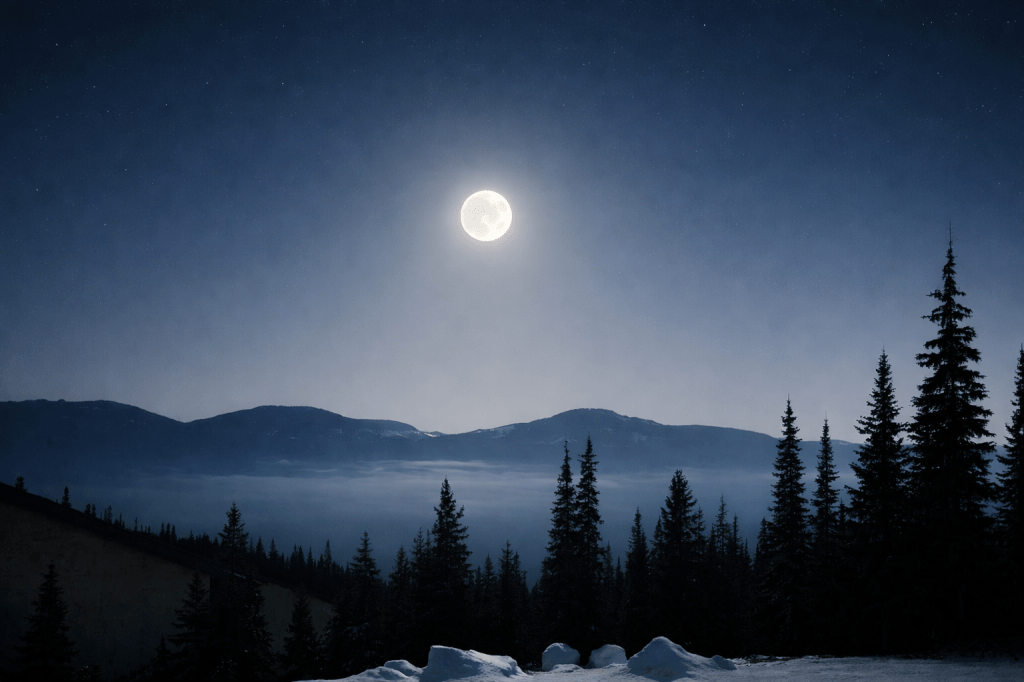
Toward evening a north wind rose. The heavy black clouds that had been hanging low all day were gradually blown away, revealing a sky of piercing clarity. Once again it was a night with a cold moon hanging in it; it seemed certain that it would be very cold tonight.
The vast universe lay silent, desolate. In such cold weather, the body grows like wood or stone—numb, without sensation; the mind becomes empty space, stretching on without end. After reading a few pages of Six Records of a Floating Life, he went out for another walk. He remembered his childhood: on cold days, punching holes in empty tin cans with a big nail, threading wire through them as handles, filling them with burning charcoal, then running all over the place, swinging the can through the air with hands swollen and red from the cold. His eyes saw only an infinite world; he knew nothing of himself, nothing of things beyond his body—nor even that he did not know whether there was a self or not, whether there were things or not.
Perhaps after death, like the wife of the book’s protagonist, one simply goes to a place like this—cold and desolate. But by then, nothing matters anymore; cold would no longer be a concern. Such places do not belong to the busy. They belong, perhaps, only to the dead, to those who have let go of body and mind, or to the people in books, or to children in whom self and world are still undivided.
After night had fallen—he did not know how long it had been—he sealed up the stove and was about to go to bed when he faintly heard footsteps: light, quiet, almost unreal, yet unmistakably clear. He rushed out the door.
In the snow, beneath the gray streetlamp at the bridgehead, someone was walking toward him. It was a figure he knew all too well. He began to run, stumbling again and again; the ground, glazed with a thin crust of ice, cracked sharply under his feet.
She was bundled head to toe in heavy winter clothes, the bulk making her steps unsteady. Most of her face was wrapped in a scarf; only her eyes and forehead were exposed. Seeing him running toward her, she took a few steps forward, then stopped, letting him stumble up and seize both her hands.
“I knew it,” he said again and again, shaking her arms. “I knew it—I just knew you’d come back tonight.”
She nodded with difficulty several times. In the starlight, a glimmer of joy could be seen flickering in her eyes. Even through her woolen gloves, her hands were icy. Once inside, he helped her remove the gloves and held her cold hands in his own.
“They’re like ice,” he said.
She wanted to say something, but her face had been frozen for so long, and the scarf still covered her mouth; the words never came.
“Let me take this off too,” he said, and began untying her scarf. As he did so, he touched her small, icy face.
“You must be frozen,” he said. “If you’d planned to come back tonight, did it really have to be tonight?”
“This morning at the main bureau I ran into a jeep from our unit,” she said. “So I came back with them.”
Luckily he had lit the fire in advance. The room was warm, and before long she had recovered considerably.
“After being away a few days, I found I missed this place,” she said. “Tell me—what have you been doing these past days?”
He told her about the students’ visits, the dinner with the primary-school teachers, practicing penmanship, the afternoon walks up the hill behind the school. Only the moment that afternoon when his thoughts had drifted toward death—he did not tell her about that.
“There’s only you,” she said with a helpless smile after listening, “who would think of practicing penmanship on a day like this.”
“Tell me about the city,” he said.
“I was mostly in the hospital,” she said. “Didn’t really go anywhere.”
“Did you go see that old tailor?” he asked.
“No,” she said. “You know I wouldn’t.”
He thought about it and felt she was right.
“What about the hospital?” he asked again. “Did you have tests done?”
She did not answer immediately. She turned her head and glanced behind her.
“Everything’s fine,” she said at last, briefly, turning back.
The kettle on the stove hissed and bubbled.
“You must be tired,” he said, standing up. “Go wash up first. I’ll be back in a moment.”
He stepped outside and stopped beneath the eaves, standing there for he did not know how long, his mind completely empty. Only when a gust of cold wind made him shudder did he return inside.
She was standing beneath the dim yellow light, dressed in a thin duck-egg-blue silk nightgown, alone, delicate and luminous.
“You’re very beautiful,” he murmured. Yet he stood frozen by the door, as if congealed. Only after a long while did he seem to wake from a dream and begin slowly walking toward her.
At that very instant, the light suddenly went out, plunging the room into darkness.
“Looks like the power’s out again,” he said in the dark. “It already went once this afternoon.”
Gradually his eyes adjusted. The bluish flame in the stove became visible. She walked over slowly and lightly placed her hand on his arm. Together they went to the window and drew back the curtain. He looked toward the bridge.
“So it is a blackout,” he said. “Even the streetlights are out.”
She said nothing, only gazed dreamily out the window.
“What a cold night,” she said softly, as though in a dream. “Such cold moonlight.”
In the clean, silent sky outside, a bright moon hung overhead. Moonlight flowed like water, pouring over the vaguely outlined, ice-bound world below—like an invisible thoroughfare linking the frozen human realm with the cold, star-flecked night sky above.
He did not know how long they stood there. Only now and then did the fire crackle softly behind them. He slowly turned so that he could see her more clearly. In the pale refraction of moonlight, her head was slightly raised; her features sharply outlined, her face colorless. In her dreamlike eyes lay a faint sorrow born of memories of days gone by. In all the time they had been together, he had never seen her so sorrowful—and so moving.
In the silent night, he drew her into his arms without a sound, pressing his face gently to her cheek, touching her lightly. Her thin body held only the faintest trace of warmth; her smooth cheek was cold and slick, like chilled marble. Her narrow shoulders seemed ready at any moment to dissolve into some clear, cold substance, slipping free of his grasp and drifting away with the night.
In the loneliness of the freezing night where the soul itself seemed to dissipate, time appeared to slow. All things passed from stillness into frost, gradually dissolving into nothingness, until even longing ceased to exist. Only the spirit, soundless, rose gently in the cold starry night, yearning to become one with the heavens.
 Yego’s Chronicles