1
Little recollection remained of when the penetrating cold first took hold of him. It seemed to arise steadily from deep within and, each time it came, immediately spread through the whole body. The world had shrunk to a narrow black-and-white stream of dotted lights—silent, broken, and rapidly fleeing. All that remained were the sharp pains in the stiffened joints and the soreness in the muscles caused by frequent cramps.
The small, skeletal body of the early adolescent and the thin limbs shuddered every time the chills came and the fits started. The senses had become so heightened that even the dim light from the oil lamp pierced through the tightly shut eyes, causing stinging pain. The thick blanket in which he was wrapped hurt him more than it made him warm.
It had not always been like this though. Earlier on, when the intervals between the waking moments were still not as lengthy as they were now, he could still feel, in reminiscence, the waves of nausea that came just before the cold began to take hold of him. There were also times when fragmentary memories of hurried figures moving across the room flashed through his foggy mind. Once, in one of those brief awakenings, he thought he saw sunlight falling across a mountain path somewhere far away, though he could not tell whether it was memory or dream.
But all this was quickly fading, as the unyielding cold from within gradually tightened its grip on him. As he lay face down with knees bent and arms wrapped around his chest, a shrinking world of darkness with vertical streaks of gray lines was caving in on him.
Sometime around midnight he came to briefly, only to sink back into unconsciousness moments later.
A descending spiral of clouds, thin and loosely joined, with its funnel-shaped end pointing downward had suddenly stopped in midair—frozen for the moment, as it were—before taking him and resuming its fatal downward spiral toward the dark and foreign land below.
He woke to an expanding world of warm, slow-floating air. Things still looked hazy, but the shrinking gray world had been replaced by a colorful, almost bubbly one. He was lying face up, with uncovered limbs spread out. The head felt unusually heavy, and there was also lingering pain with some dull voices echoing in it; however, the previously contracted muscles and joints had relaxed, and the sheeting beneath his head was soaked with sweat.
The night must have turned hot at some point without him noticing it.
A delirium had set in for some time. At the height of the fever a moment of awareness would suddenly return, and then, for a brief moment, everything would be as clear as day.
“A shot of quinine,” an unfamiliar voice at once came into his ear.
On another occasion he heard a voice say, “Plenty of water, but no food.” The voice was answered by another muffled voice that came from the far side of the room.
There were also a few times when he suddenly rose and spoke to the figures at the bedside, as if he had just woken up from a dream and realized something important.
“Quick, send for Mom at the hospital!” he muttered, but would immediately drop back into bed even before the words were finished.
Then, from some immemorial time on, the bubbly, slow-expanding world receded, and everything began to slow down. A cool breeze started to blow, steadily and continuously. Before his closed eyes stretched a thin, whitish sky, almost autumn-like. It spread so thinly, and so far and wide across the firmament, only to suddenly drop back down into the four bleak corners of the autumn earth.
He lay face down on rows of dark, newly plowed damp soil that ran far off into the distance beneath the autumn sky. The body and the limbs were so heavy they felt as if they had been flattened and filled with lead. The heavy weight held him down, pressing his face and every inch of his skin hard against the damp soil; short but stinging pain shot through the muscles every time he moved.
He could not tell whether it was he who was lying face down on the soft and damp soil that buried him up to the face, or whether he himself had become the freshly plowed soil lying beneath the broad sky. The eyes seemed to have become detached from the rest of his body; from behind the void where the lines of vision converged they registered the unchanging autumn scene—the desolate land that began beneath his face and spread far into the distance, where a tractor with rows of sharp plows moved back and forth, churning up fresh dark earth—or his flattened body. Even with his face buried in the damp soil he could still see the rows of deep cuts made by the machine into the flesh on his back.
He fell asleep at some point.
A slow, heavy climb up a mountain path. In the undergrowth by the roadside grew exotic plants with large, tube-shaped yellow flowers. The path curved to one side and disappeared as soon as it turned the corner. From behind the hills on the other side, rays of broad and glaringly bright light poured forth against the background of a golden and yet empty sky filled with the same broad and glaring light.
2
He could now get up and walk about for several minutes at a time, and was well enough to be left at home alone for most of the day. But he was still weak; even a short trip outside for firewood would make him sweat profusely and gasp for air.
The highland sun was always hot and dry, but its scorching force reached only things directly exposed to it. Inside the house the air remained pleasantly cool. During the long hours of the afternoon, when the sun reached the height of its power, there were always rays of light that managed to creep through the cleaves in the roof and fall into the rooms. Like sharp swords, the beams of transparent light—with tiny specks of dust floating in them—pierced the still air before the eye, giving the silent void an almost solid, tangible presence.
The upper level of the two-story country house had a broad wooden window in the front with vertically mounted panes. From the window he could see half of the village houses, which were built in tiers on two adjoining hills separated only by a creek.
The view from the window rarely changed. The first thing that came into view was always the layers of pointed roofs. Beyond them, blue smoke drowsily rose in gentle curls above the gray tiles of the village houses, which glittered in the sun. The sky above the valley farther down the hills was always open and clear.
Farther off, where the mountains met the edge of the earth, towering fiery clouds filled the horizon. Like flames that had descended from heaven, they burned continuously throughout the day.
3
He had been standing at the window since early morning. Someone in a house a few levels down the hillside had died the night before. The loud mourning howls of women could be heard from the window.
From where he stood he could clearly see the activities in the courtyard. The family was apparently in the process of placing the deceased in a coffin. The procedure was being carried out in the hall, which had been cleared for the purpose.
The deceased appeared to be a man; the cloth that covered his head had been flipped to one side. A man with a shaving knife knelt beside the head of the deceased and began to shave it. While he was doing the shaving, several other men dressed in black stood silently by the bedside. The shaving did not take long, and as soon as it was finished the hair was immediately swept into a short-handled shovel and taken away. Water was carried to the bedside in small bowls, and the shroud that had covered the body of the deceased was partly lifted. One of the men who had been standing by the bedside picked up a towel, dipped it into a bowl, and began to wash the exposed part of the body.
He could not see the face of the deceased, but he could see the cleanly shaven head and the very white body. All the people in the hall were men, and they moved about silently. The loud wailing came from two women in the courtyard outside the hall. They were both on their knees, bending their heads to touch the ground in rhythm with the slow mourning tune they were singing. The crying was a simple tune that they repeated again and again, but he could not make out the words.
While the body was being washed, several men prepared the coffin, which had been placed on the ground with its lid laid to the side. A few brick-sized clods of hardened earth lay beside the coffin. The men wrapped the clods one by one with a kind of yellow paper punched with small holes; they then placed the wrapped pieces inside the coffin near the front.
When all this was done, the now well-dressed corpse was placed into the coffin and the lid was nailed back on. As soon as this was finished, the womenfolk were allowed to enter the hall. They did so with the assistance of other women at their sides who did not join the wailing. As soon as they reached the coffin they threw themselves upon it and began to cry loudly again.
The intermittent wailing of the women could be heard long after the coffining of the dead had finished.
4
His father took him along when he went to pay his condolence visit to the mourning family. The walk took only a few minutes. There were already visitors when he and his father arrived, and freshly written mourning couplets and other signs had been hung on the doors. As they entered and passed through the tiny courtyard, he saw a few women and children in the wing house with white hemp cloths tied around their heads.
The son in mourning was in the hall where the coffin stood. It was a wooden structure painted red and black, now resting on two racks. The head of the household was kneeling on the floor with a white hemp turban on his head. His father went up to the man to express his condolences, and the man raised his head to speak with him. His eyes were dry and he had a dazed look on his sallow, slightly emaciated face. He also looked tired.
Before they left he saw more visitors come in. They all went to greet the man in mourning just as his father had done. All the while the man’s knees never left the ground.
“We will come back and spend some more time here in the evening,” his father said to him as they left the house. “But right now we must go to the village common house. The funeral banquet is being given there.”
The common house turned out to be a large enclosed building complex consisting of a spacious courtyard and double-level halls with open fronts on three sides. The guests were squatting on the floor in groups of eight. Several dishes had been placed on the ground in front of each group. The guests ate quickly in silence and no one talked.
Later in the evening he and his father returned to the house of the mourning family. Most of the visitors had left; only a few close relatives and friends remained. They all sat in the middle of the hall on small round stools made of rice stalks. The coffin stood just behind them.
It was quiet in the house. The sun had almost gone down, and one could see stars appearing in the sky above the walls across the courtyard. The vigil keepers were smoking homemade tobacco and engaged in leisurely but intermittent conversation.
It was soon completely dark. An oil lamp hung from a column in the corner and dimly lit the empty hall. A candle in a small dish stood on the protruding head of the lower piece of the coffin; it made a gentle sputtering sound as it burned away. Through the dim light he could also see the wreaths made of white paper. He could see the offerings on the small table placed in front of the coffin—a few bundles of burning incense and several dishes of fruit. Now and then one could hear the barking of a village dog; but the noise would stop as quickly as it started, and silence would reign again.
He did not remember anything the adults said that night. The coffin was just a little to his right. He knew there was a dead person lying inside it. He had seen how the man was shaved, washed, and placed in the coffin. But strangely, none of this caused any particular feeling in him.
He could see the dark and seemingly heavy coffin looming in the background; he could hear the candle in the small dish sputtering; he could also feel the still air hanging quietly in the hall. But none of this struck him as foreboding or ominous. If anything, it was rather the opposite. There was something homely about the scene, as if he had sat in halls in the dark like this many times before.
5
Few noticed him as he wandered away from the group of mourners, who had now gathered at the clan burial ground of the family of the deceased after hours of climbing along narrow mountain paths.
The smooth top of the mountain ridge was so high above the surrounding peaks that the view from here appeared almost aerial. From the gentle slope where he stood, the village’s crop fields far below looked like tiny green dots, and the winding mountain path by which the funeral procession had come now resembled a broken brown line on a painter’s canvas.
On the slope where he stood thick grass grew everywhere, some reaching as high as his thigh, and a swishing sound rolled across the otherwise silent background whenever the wind passed through. The rustling added an atmosphere of otherworldliness to the place.
Members of the procession, including the team of coffin carriers, were now preparing to lower the coffin into the grave, which had been constructed years before. A few items—bundles of incense, stacks of yellow paper with holes punched halfway through, several cooking pots filled with prepared dishes, and a live rooster with its legs tied—were scattered on the ground nearby. Against the bare and nearly level background, the grave’s semicircular shape and the tall grass that had grown around it made it look strangely out of tune with its surroundings.
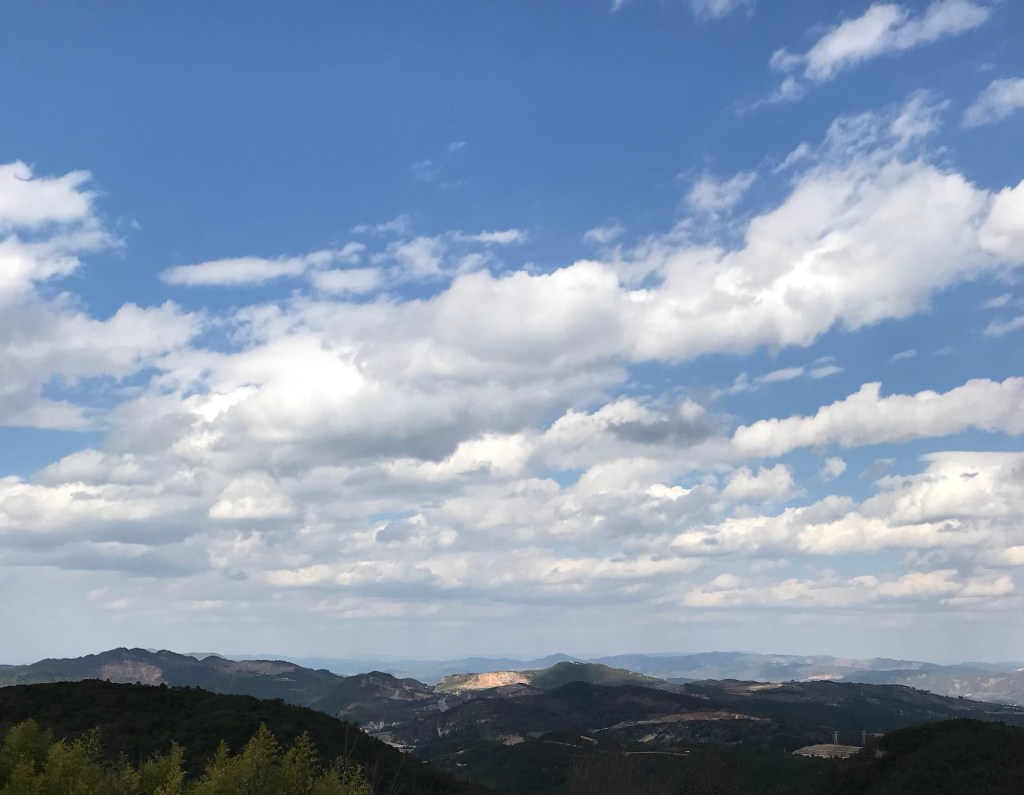
He turned his eyes away from the burial site as the ceremony was beginning and looked in the opposite direction. A distant panoramic scene of mountains unfolded beneath the broad blue sky as far as the eye could see. The view and the glaring sky light dazzled his eyes as well as his young mind, and for a moment absorbed him completely.
Slowly emerging from that absorption, but with his eyes still fixed on the distant scene, he attempted to walk and almost tripped. Lying across his path were several drooping stems of wild olive branches heavy with ripe fruit. Without being fully aware of what he was doing, he grasped one of the branches and picked several of the fruits within easy reach before letting it fall back.
The fruits—whose appearance he had not taken time to examine when he picked them—were small and round but felt firm. As he held them in his small hands he felt the cold, unmistakable sensation they gave off, and the coolness seemed to last as long as he kept his hands tightly closed.
Had he turned around at that moment, he would have noticed that the burial had already been completed. But the thought never crossed his mind that day. As he continued to gaze outward, the boundless sky above and the timeless mountains seemed to extend farther and farther.
And they would continue to do so for a thousand years.
 Yego’s Chronicles